Manhattan
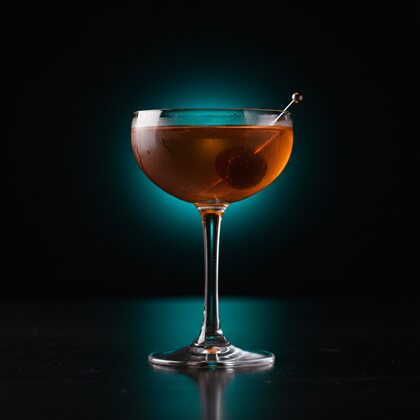
The Manhattan is the drink that separates a bartender who can stir from one who only thinks they can. Rye whiskey, sweet red vermouth and a dash of aromatic bitters, stirred cold and strained into a chilled stemmed glass with nothing in it but one cherry. There is no ice in the serving glass to hide behind, so the temperature and dilution you reach in the mixing glass are exactly what the guest tastes. Made well it is glossy deep amber and silky, rye spice up front, vermouth sweetness in the middle and a long bitter finish.It is still the most ordered stirred whiskey cocktail in hotel bars after dark.
Specification
| Ingredients | Amount | Role in the glass |
|---|---|---|
| Rye whiskey | 50 ml | The engine. Pepper, clove and a dry grain edge that keep the vermouth in check. Use a rye of at least 45% ABV so it survives dilution |
| Sweet red vermouth | 20 ml | Sweetness, body, dried fruit and wormwood bitterness. It is a wine, so refrigerate once opened and finish within 4 to 6 weeks |
| Aromatic bitters | 1 dash, about 1 ml | Clove and gentian that tie the whiskey to the vermouth and lengthen the finish. Without it the drink tastes flat and sweet |
| Ice for stirring | Mixing glass filled with dry 3 to 4 cm cubes | Chills and dilutes at once. This size gives a controlled 20 to 25% dilution in 30 seconds. Never stir on wet or crushed ice |
| Cocktail cherry | 1, dark, brandied or in syrup, on a pick | The IBA garnish. A dark cherry adds a whisper of almond and fruit. A neon red one looks like a milkshake |
Technique
- Put a coupe or Nick & Nora glass in the freezer at least 10 minutes ahead, or fill it with ice and water while you workThe drink is served without ice. A room temperature glass warms 70 ml by 4 to 5 °C within a minute, and the guest tastes alcohol instead of silk
- Fill a mixing glass two thirds with dry 3 to 4 cm cubes straight from the freezer and tip out any meltwaterMeltwater is dilution you did not measure. Dry, cold ice lets you control the water with the stir count instead of guessing
- Measure with a jigger: 20 ml sweet vermouth first, 1 dash of aromatic bitters, then 50 ml ryeVermouth first means a mistake costs 20 ml of wine, not 50 ml of whiskey
- Stir with a bar spoon, back of the spoon against the glass, 30 to 40 smooth turns, about 25 to 30 seconds. Stop when frost forms on the outside of the mixing glassThis brings the drink to about -3 to -1 °C and dilutes it by roughly 22%, which turns 45% rye into a rounded 30% cocktail. Stirring keeps it clear and silky. Under stirring leaves it hot and harsh, stirring past 45 seconds makes it watery
- Julep strain into the chilled glass and stop the pour 1 cm below the rimA julep strainer fits a mixing glass and lets no ice chips through, so the drink stays glossy. The space lets the guest lift the glass without spilling and gives the aroma room
- Drop in one dark cocktail cherry on a pick, or express a lemon peel first if the guest prefers a drier style, then serve at onceThe cherry is the IBA garnish and echoes the dried fruit in the vermouth. A stirred drink peaks in its first 60 seconds
Service
Origin
The Manhattan is a New York drink of the 1870s to early 1880s, the years when Italian vermouth first reached American bars and bartenders began adding it to the old whiskey cocktail of spirit, sugar and bitters. The earliest print reference found so far is a newspaper item in the Sunday Morning Herald of Olean, New York, in September 1882, which names the drink and lists whiskey, vermouth and bitters. The first detailed recipes came in 1884: O.H. Byron's The Modern Bartenders' Guide gave two versions, one with Italian sweet vermouth and one with French dry vermouth. The famous legend that Jennie Jerome, later Lady Randolph Churchill and mother of Winston, had the drink invented at the Manhattan Club in 1874 for a banquet honouring Samuel Tilden's election as governor does not survive checking: Winston was born in England on 30 November 1874 and his mother was at his christening there in late December, so she could not have hosted a New York dinner that month. The club did occupy a mansion built by her father, which is probably how her name attached itself. A rival account, published in 1923 by retired bartender William F. Mulhall, credits a man named Black who kept a bar on Broadway just below Houston Street in the 1860s; historian David Wondrich found a George Black with a saloon in the right area in the 1870s, which fits better but is still unproven. Early recipes were often equal parts whiskey and vermouth. By the early 20th century 2 to 1 in favour of the whiskey had become the norm, and today's IBA spec of 50 ml to 20 ml is a slightly drier reading of that idea. Rye was the original spirit. Prohibition broke the rye industry, Canadian whisky filled the gap, and after repeal bourbon slowly took over. The craft cocktail revival of the 2000s sent bartenders back to the pre Prohibition books and rye returned. The IBA lists the Manhattan among The Unforgettables.
Taste and body
The nose is rye spice, cask vanilla and a hint of clove. The first sip is warm and full: pepper and toasted grain from the whiskey, then the vermouth arrives with raisin, dried cherry and a soft herbal bitterness that stops it turning sweet. The texture should be silky and slightly viscous, the sign of correct dilution at low temperature. The finish is long, 30 to 40 seconds, drying and gently bitter. The colour is clear deep amber with a red glint. Any haze or foam means it was shaken or strained with ice chips.
Pairs well with
- Aged hard cheese such as Gouda, Comté or Manchego
- Dark chocolate of 70% or more, and chocolate desserts
- Roast duck, beef short rib and other rich braised meats
- Charcuterie with a sweet edge such as bresaola or duck prosciutto
- Salted caramel, pecan pie and roasted nuts
- Cigar lounge service, it holds up to smoke
Hotel bar variations
- Perfect Manhattan · Split the vermouth: 10 ml sweet red and 10 ml dry. Perfect in cocktail language means half and half vermouth, not a compliment. Drier and more herbal, usually with a lemon twist
- Dry Manhattan · All 20 ml of vermouth replaced by dry vermouth, lemon twist garnish. The idea is as old as the drink: O.H. Byron's 1884 guide already printed a French vermouth version alongside the Italian one
- Rob Roy · Scotch whisky in place of rye, same 50/20 build and a dash of bitters. Credited to the bar of the Waldorf Hotel in New York in 1894 and named for the operetta Rob Roy that had just opened nearby, although some historians question the Waldorf claim
- Brooklyn · Rye, vermouth, a dash of maraschino liqueur and a dash of French style bitter orange amaro. First printed in Jacob Grohusko's Jack's Manual, New York, 1908, with sweet vermouth; the dry vermouth version most bars pour today dates from 1913 and was fixed by the Savoy Cocktail Book of 1930
- Black Manhattan · Sweet vermouth replaced by a dark Sicilian style amaro, 50 ml whiskey to 20 to 25 ml amaro, 1 dash of aromatic bitters. Created in San Francisco in 2005 by bartender Todd Smith and made famous at the bar Bourbon & Branch. Darker and more bitter, with cola and burnt orange notes
Common mistakes
- Shaking it. A shaken Manhattan is cloudy, foamy and over diluted. Everything in it is spirit or wine, so it is stirred, always
- Old vermouth from the back bar. Vermouth is fortified wine. Months at room temperature and it oxidises, sour and flat. Refrigerate after opening and date the bottle
- Serving in a warm glass. There is no ice to keep it cold, so a room temperature coupe undoes 30 seconds of careful stirring in about a minute
- A neon red cherry from a jar of syrup. It tastes of candy, bleeds pink into the drink and tells the guest the bar does not care. Use a dark brandied or syrup cherry
- Stirring by clock alone. Ice size and temperature change the result. Count turns, watch for frost on the mixing glass and taste with a straw until you know your ice
Bartender's notes
Ask two questions before you pour: rye or bourbon, and sweet, perfect or dry. Most guests do not know the words, so offer them plainly: rye is spicier and drier, bourbon rounder and sweeter; perfect means half dry vermouth for a lighter drink. Twenty seconds of talk turns a standard order into a personal one. For a busy evening, batch the spirit part: 500 ml rye, 200 ml sweet vermouth and 10 dashes of bitters in a bottle in the fridge, stirred to order, which saves jigger time but keeps the dilution honest. Do not batch with water and freeze it as you would a Negroni; served without ice, this drink depends on a fresh stir. Keep the cherries in the fridge; the guest watching you spear a glossy dark cherry is part of what they pay for.
Let the AI bartender pick the right one for you
One photo. The AI reads your mood and chooses from all 20 classics.
Frequently asked questions
What is the official IBA Manhattan recipe?
50 ml rye whiskey, 20 ml sweet red vermouth and 1 dash of aromatic bitters. Pour all ingredients into a mixing glass with ice cubes, stir well and strain into a chilled cocktail glass. Garnish with a cocktail cherry. The IBA lists it among The Unforgettables.
Rye or bourbon?
Rye is the original and what the IBA specifies. It is spicier and drier, which balances the sweet vermouth. Bourbon became common after Prohibition and gives a rounder, sweeter drink. Both are correct; ask the guest, and with no preference pour rye.
Why is it stirred and not shaken?
Everything in the glass is spirit or fortified wine, with no juice, egg or cream. Stirring chills and dilutes while keeping it clear and silky. Shaking clouds and over dilutes it.
How strong is a Manhattan?
About 30% ABV after stirring. Stronger than a Negroni and close to a Martini, which is why it is served in a small glass and sipped slowly.
What does perfect mean in a Perfect Manhattan?
The vermouth is split half sweet, half dry, 10 ml of each. It is a technical term for the vermouth balance, not a claim about quality. A Perfect Manhattan is drier and usually takes a lemon twist.
Did Winston Churchill's mother invent the Manhattan?
No. The story says Jennie Jerome hosted a banquet at the Manhattan Club in 1874 where the drink was created, but she gave birth to Winston in England on 30 November 1874 and was at his christening there in late December. The drink is genuinely from New York in that era, but its inventor is unknown.
What is the difference between a Manhattan and a Rob Roy?
Only the whiskey. A Rob Roy uses Scotch instead of rye or bourbon, with the same sweet vermouth and bitters. It is credited to the Waldorf Hotel in New York in 1894 and named after an operetta playing at the time.
What glass should a Manhattan be served in?
A chilled stemmed cocktail glass, ideally a coupe or Nick & Nora of 150 to 180 ml, which holds the 85 ml or so of finished drink with room for aroma. On the rocks in an Old Fashioned glass is acceptable if the guest asks.