Negroni
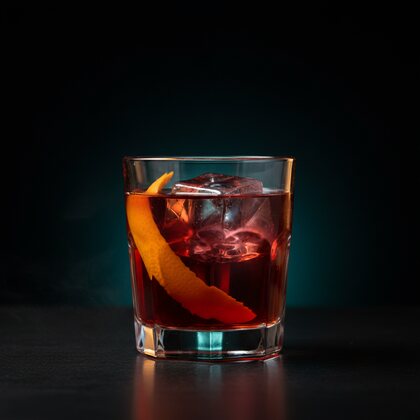
The Negroni is the drink head bartenders use to test a new hire. It is the simplest recipe on the menu and the least forgiving. Three ingredients in equal parts, no juice, syrup or foam to hide behind, so every fault shows in the glass: ice that melts too fast, a stir too short to chill it, a peel that was never properly expressed. Done right it is a clear ruby glass that opens on herbal bitterness, turns to vermouth sweetness and finishes long on orange oil. It has been one of the best selling aperitivo drinks in hotel bars worldwide for a century.
Specification
| Ingredients | Amount | Role in the glass |
|---|---|---|
| London dry style gin | 30 ml | The backbone. Juniper edge, strength and dryness that keep the sweetness in check |
| Red Italian bitter (bitter rosso) | 30 ml | Herbal and orange peel bitterness, the ruby colour and the identity that makes a Negroni a Negroni |
| Sweet red vermouth | 30 ml | Sweetness, body and spice that bridge the bitter and the strong. Refrigerate after opening |
| Ice | One large clear cube, or 5 cm cubes to fill the glass | Chills and dilutes. Large ice melts slowly and holds the drink together for 20 minutes or more |
| Orange peel | 1 strip, about 2 by 5 cm | The oils on the surface are the first aroma the guest meets, and orange echoes the peel in the bitter |
Technique
- Chill the rocks glass in the freezer, or rest ice in it for a minuteA cold glass stops the drink warming as it is built and slows the ice melt
- Add a large ice cube, then tip out any meltwaterMeltwater is uncontrolled dilution. Start from dry ice
- Measure 30 ml each of gin, bitter and vermouth with a jigger and build directly in the glassThe IBA spec is built in the serving glass, no mixing glass needed. Equal parts is the whole idea, so measure every time
- Stir with a bar spoon hugging the inside of the glass for 20 to 30 turns, roughly 15 to 20 secondsStirring does two jobs at once: it brings the drink down to about -2 to 0 °C and dilutes it by around 20%, which softens the alcohol. Spirit only drinks are stirred, never shaken, because shaking clouds and aerates them
- Express the orange peel oil side down about 5 cm above the drink so you can see the oils land, wipe the rim, then drop it inThe oils on the surface reach the nose before the bitterness reaches the tongue. It is the step the guest watches and remembers
Service
Origin
The Negroni was born in Florence around 1919 at Caffè Casoni, when Count Camillo Negroni asked bartender Fosco Scarselli to make his usual Americano stronger by replacing the soda with gin. Scarselli swapped the lemon garnish for orange so the new drink could be told apart. Its bloodline runs back to Milan in the 1860s, when the red Italian bitter at its heart was created; paired with sweet vermouth it became the Milano Torino, which turned into the Americano once soda was added. The International Bartenders Association listed the Negroni as an official cocktail in 1961 and today files it under The Unforgettables as a pre dinner drink. In 1972 at Bar Basso in Milan, Mirko Stocchetto reached for a bottle of sparkling wine instead of gin by mistake and the Negroni Sbagliato, literally the wrong Negroni, was born. Since 2013 Negroni Week has been celebrated in bars around the world every September.
Taste and body
The first sip is herbal bitterness and orange peel from the bitter, followed by soft sweetness and spice from the vermouth. The gin hides in the edge and dryness that keep the glass from becoming cloying. Medium to full body, a warm finish of about 30 seconds, orange aroma throughout. The colour must be clear ruby you can see through. Cloudiness means it was shaken or built on dirty ice.
Pairs well with
- Salty hard cheese such as Parmesan or Pecorino
- Prosciutto, salami and smoked ham
- Marinated olives and artichokes in oil
- Crisps, salted nuts and other salty fried snacks
- Tomato bruschetta
- Steak or charred grilled meat, the bitterness cuts the fat
Hotel bar variations
- Negroni Sbagliato · Gin replaced by 60 ml of dry sparkling wine. Born at Bar Basso, Milan, in 1972. Lighter, fizzy and under half the alcohol, the answer for a guest who finds the original too bitter or strong
- Boulevardier · Gin replaced by 45 ml of bourbon. First printed in Paris in 1927. Warmer and sweeter, suited to winter or after dinner. An IBA official cocktail since 2020
- White Negroni · French style white bitter and white vermouth instead of the red pair. Pale gold, floral and white citrus bitterness, a modern hotel bar favourite
- Mezcal Negroni · Gin replaced by 30 ml of mezcal for smoke and agave aroma. Hotel bars use it to win over guests bored with the classic
- Americano · The ancestor. 30 ml each of bitter and sweet vermouth topped with soda in a highball. Light, fizzy and easy through the afternoon
Common mistakes
- Small or crushed ice. The drink goes flat in 5 minutes and looks nothing like hotel bar service
- Shaking instead of stirring. Cloudy, aerated and over diluted. Spirit only drinks are always stirred
- Vermouth left open on the back bar for months. Vermouth is wine. Refrigerate after opening and finish within 4 to 6 weeks or it turns sour and flat
- Free pouring by eye. The 1:1:1 ratio is unforgiving, a small slip and the glass is too sweet or too bitter
- Dropping the peel in without expressing it. The guest loses the orange aroma, which is half the experience
Bartender's notes
In a hotel bar the Negroni is the best conversation opener you have. Ask whether the guest has had one before. If not, warn that it leads with bitterness and offer the Sbagliato as an alternative. The guest feels looked after rather than sold to. For events of 200 or more, large hotel bars batch the drink: mix the three ingredients in equal parts, add 15% water by volume to stand in for stirring dilution, and keep the bottle in the freezer, where the high alcohol stops it freezing. Pour over a large cube and serve immediately with no loss of quality.
Let the AI bartender pick the right one for you
One photo. The AI reads your mood and chooses from all 20 classics.
Frequently asked questions
What is the official IBA Negroni recipe?
30 ml gin, 30 ml red Italian bitter, 30 ml sweet vermouth, built directly in an Old Fashioned glass over ice, stirred gently and garnished with half an orange slice. The IBA lists it as a pre dinner cocktail.
Is a Negroni strong?
Yes. All three ingredients are alcoholic and there is no juice or soda. After stirring on ice it sits around 24% ABV, similar to a Martini, which is why hotel bars serve it with water and suggest one before dinner.
What is the difference between a Negroni and an Americano?
An Americano is bitter and sweet vermouth topped with soda in a tall glass. The Negroni swaps the soda for gin and moves to a rocks glass, so it is roughly twice as strong and still. It was born as a twist on the Americano in Florence in 1919.
Why stir and never shake?
Drinks made only of spirits, with no juice, egg white or cream, are stirred to stay clear and silky. Shaking beats air into them, making them cloudy, foamy and over diluted.
What is a Negroni Sbagliato?
A Negroni with sparkling wine in place of gin, created by accident by bartender Mirko Stocchetto at Bar Basso in Milan in 1972. Sbagliato means wrong. It is lighter, fizzy and under half the alcohol.
What ice should I use?
One large clear cube of about 5 cm. It melts slowly, so the drink stays cold and balanced for 20 minutes or more. Small cubes or crushed ice flatten it within 5 minutes.
When should a Negroni be served?
Before dinner. The bitterness stimulates the appetite, which is what Italians mean by aperitivo. It is not a dessert drink.
Can a Negroni be batched for events?
Yes, and it is standard hotel bar practice. Combine the three ingredients in equal parts, add 15% water by volume to replace stirring dilution, and keep it in the freezer, where the high alcohol keeps it liquid. Pour over a large cube and serve at once.