Aperol Spritz
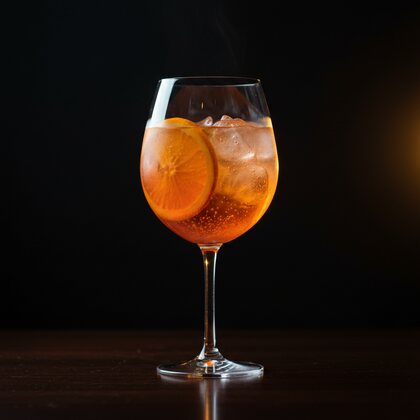
The spritz is the highest volume drink a hotel terrace pours between five and seven in the evening, and the one most often poured badly. It is a build, not a shaken cocktail: dry prosecco, an Italian orange aperitivo bitter and a splash of soda over a large wine glass packed with ice, finished with a half wheel of orange. Three ingredients, no juice, no syrup, nothing to correct afterwards, so the quality lives entirely in temperature, ice and restraint. The bitter is an 11% ABV orange coloured aperitivo built on bitter orange, gentian, rhubarb and cinchona, launched by the brothers Luigi and Silvio Barbieri in Padua in 1919, and it gives the glass its sunset colour and its gentle bitter sweet backbone. Made properly it lands at about 8 to 9% ABV, lighter than a glass of wine, bright orange, lively with fine bubbles and cold enough to fog the glass. Made carelessly it is warm, flat and sticky within three minutes. The IBA files it simply as Spritz in the New Era category, which tells you how far a Veneto café habit has travelled.
Specification
| Ingredients | Amount | Role in the glass |
|---|---|---|
| Dry prosecco (brut or extra dry) | 90 ml, at 4 to 6 °C | The body and the bubbles. Dry prosecco keeps the finish clean; the bitter already brings the sugar. Both brut and extra dry are poured in the Veneto |
| Italian orange aperitivo bitter (11% ABV) | 60 ml, kept in the fridge | Colour, gentle bitterness and sweetness in one pour: bitter orange, gentian, rhubarb and cinchona. At 11% it is what keeps the whole drink light |
| Soda water | A splash, 30 ml at most | Lengthens and lifts the bubbles without watering the drink down. More than 30 ml and the glass tastes thin |
| Ice | 4 to 5 large cubes of 3 to 4 cm, glass filled to the top | Keeps the drink at serving temperature and slows dilution. A glass full of ice melts slower than a glass with three cubes |
| Orange half wheel | 1 slice, about 1 cm thick, cut in half | Aroma on the nose and the visual signature. It sits on the rim or in the glass; it is never squeezed, because the pith turns the drink harshly bitter |
Technique
- Chill the wine glass, keep the prosecco at 4 to 6 °C and keep the opened bitter in the fridgeEverything in this drink is served cold and nothing is stirred long enough to chill it. Warm ingredients meet ice, melt it fast and the glass is flat and diluted before it reaches the table
- Fill a large 450 to 550 ml wine glass to the top with 4 to 5 large cubes of 3 to 4 cmIce is the structure. Large cubes present less surface area, so they chill without flooding the drink with meltwater, and a full glass keeps the liquid level high and cold for 20 minutes
- Pour 90 ml of dry prosecco first, tilting the glass so the wine runs down the sideThe Veneto habit is prosecco first. Pouring down the side keeps the mousse and the carbon dioxide in the wine rather than foaming it out over the ice
- Add 60 ml of the orange bitter, poured slowly over the iceThe bitter is heavier and sweeter than the wine, so it falls through the prosecco and mixes on its own. That is why a spritz built bitter last needs almost no stirring
- Top with a splash of soda, 30 ml at mostSoda opens the drink and adds a second wave of bubbles. Measured at 30 ml or less it lengthens without thinning; free poured it is the most common reason a spritz tastes watery
- Lift with a bar spoon 2 to 3 times from the bottom, gently, no moreThe IBA method says stir gently. Two or three lifts bring the bitter up through the wine and finish the mix; ten turns knock the carbon dioxide out and the drink dies in the glass
- Add a half wheel of orange on the rim or slipped into the glassThe IBA garnish is a slice of orange. On the nose it echoes the bitter orange in the aperitivo, and it is the visual cue guests recognise across a terrace
Service
Origin
The spritz begins as a request for water. After 1815 the Veneto and Lombardy came under Habsburg rule, and the Austrian soldiers and officials posted there found the local wines heavier than what they drank at home. They asked the osterie for a Spritzer, from the German spritzen, to spray or splash, meaning a splash of water in the glass. For most of the 19th century that is the whole recipe: local wine lengthened with still water. In the early 20th century soda water took the place of still water and gave the drink its lift, and in the decades that followed the cafés of Venice and Padua began adding a splash of a local bitter or aperitivo to the wine and soda. So the spritz with bitter is a Veneto café habit well before it has a single recipe, and every bar poured its own. In 1919 the brothers Luigi and Silvio Barbieri presented their orange aperitivo bitter, 11% ABV, at the Padua trade fair, the Fiera di Padova, after seven years of development. It did not become widely popular until after the Second World War, and through the 1950s the orange bitter spritz became the standard pour in Padua and across the Veneto. The producer was acquired by a large Italian drinks group in 2003, which marketed the drink internationally with the 3-2-1 recipe, three parts prosecco, two parts bitter, one part soda, and from about 2010 onward a regional aperitivo turned into a global summer drink. The International Bartenders Association lists it as Spritz in the New Era category: 90 ml prosecco, 60 ml bitter, a splash of soda, built in a wine glass over ice. In the Veneto the word spritz still covers the whole family, with a red Italian bitter, with an artichoke based or other local bitter, and since 2005 the Hugo Spritz, created by bartender Roland Gruber in Naturno, South Tyrol, with elderflower syrup, mint, prosecco and soda.
Taste and body
The first thing is the nose: fresh orange from the half wheel and a sweet, herbal orange from the bitter. On the palate the prosecco arrives first, dry, with green apple and pear and a fine mousse, then the bitter fills the middle with candied orange, a soft gentian and rhubarb bitterness and just enough sugar to round the acidity. The soda keeps the whole thing light and lifts the bubbles. The finish is short, clean and slightly bitter, which is what makes the second sip easy and the appetite wake up. Body is light, alcohol about 8 to 9%. The colour should be clear bright orange with visible bubbles rising; a dull, flat, deep orange glass means warm ingredients or a spritz that was stirred too hard.
Pairs well with
- Cicchetti, the small Venetian bar bites on bread
- Green olives, crisps and salted almonds
- Prosciutto and melon
- Tomato bruschetta
- Fried calamari with lemon
- Mozzarella and tomato with basil
Hotel bar variations
- Spritz with red bitter / Spritz Bianco · The Veneto family. Same 3-2-1 build with 60 ml of a red Italian bitter instead of the orange aperitivo gives a stronger, drier, more bitter glass at about 11% ABV, the answer for guests who find the orange version sweet. The bianco uses 60 ml of white vermouth for a pale, floral, softer spritz
- Hugo Spritz · Created in 2005 by bartender Roland Gruber in Naturno, South Tyrol. 20 ml elderflower syrup, 5 to 6 mint leaves clapped, 90 ml dry prosecco, a splash of soda, built over ice in a wine glass with a lime wheel. Floral and fresh, no bitterness at all, popular with guests who want something lighter than the orange spritz
- Spritz Veneziano with an artichoke or herbal bitter · The old Venetian bacaro pour, 60 ml of a local artichoke based or herbal bitter instead of the orange aperitivo, same prosecco and soda. Dark, savoury, distinctly bitter and dry, a spritz for the guest who orders a Negroni on other nights
- Limoncello Spritz · 60 ml lemon liqueur, 90 ml dry prosecco, a splash of soda over ice, garnished with a lemon wheel and a mint sprig. Sweeter and sharper than the orange version, no bitterness. Keep the soda at 30 ml because the liqueur is already sweet
- Zero proof Spritz · 60 ml non alcoholic orange bitter aperitivo, 90 ml alcohol free sparkling wine, a splash of soda, same glass, same ice, same orange half wheel. Looks identical on the terrace, which matters for guests who do not drink but want the same glass in hand
Common mistakes
- Warm prosecco or warm bitter. The ice melts in seconds, the bubbles vanish and the drink tastes flat and sweet. Prosecco lives at 4 to 6 °C, the opened bitter in the fridge
- Too little ice. Three cubes in a big wine glass dilute fast and the drink is warm by the third sip. Fill the glass to the top with large cubes
- Stirring hard or for too long. Ten turns of the bar spoon strip the carbon dioxide out of the prosecco. Two or three gentle lifts is the whole stir
- Too much soda or a sweet prosecco. Free poured soda makes it watery; a sweet or demi sec prosecco on top of a sweet bitter makes it cloying. Measure 30 ml of soda and pour dry, brut or extra dry
- Squeezing the orange into the drink, or serving it in a small glass. Squeezed pith adds a harsh bitterness that has nothing to do with the aperitivo, and a 250 ml glass cannot hold the ice the drink needs
Bartender's notes
On a hotel terrace the spritz is the highest volume and highest margin aperitivo serve you have between 17:00 and 19:00, so build it as a system, not as a cocktail. The speed build is glass, ice, prosecco, bitter, soda, orange, in that order, and a trained bartender does it in 30 seconds without a shaker or a mixing glass. Prosecco freshness is the quality lever: open bottles go under a stopper, stay at 4 to 6 °C and are used within 24 hours, after that they go to the kitchen. For a reception of 100 guests, pre build the glasses with ice and 60 ml of bitter on trays in the cold room, then add the 90 ml of prosecco and the splash of soda at the moment of service, so every glass leaves the bar with live bubbles. Set the aperitivo snack alongside as a matter of course: a saucer of olives, crisps and salted almonds per two guests, cicchetti or bruschetta for a longer reception. Keep the conversation short and useful: ask if the guest knows the drink, and if they say it is too sweet, offer the same build with a red Italian bitter, which is drier and a little stronger. Guests who feel looked after order the second glass without being asked.
Let the AI bartender pick the right one for you
One photo. The AI reads your mood and chooses from all 20 classics.
Frequently asked questions
What is the official IBA Spritz recipe?
The IBA lists the drink as Spritz in the New Era category: 90 ml prosecco, 60 ml Italian orange aperitivo bitter and a splash of soda water. Method: build all ingredients into a wine glass filled with ice, stir gently. Garnish with a slice of orange.
What is the 3-2-1 ratio?
Three parts dry prosecco, two parts orange bitter, one part soda. It is the same as the IBA 90 ml, 60 ml and a splash: 90 ml of prosecco and 60 ml of bitter is 3 to 2, and the splash of soda is the one part, about 30 ml at most. Scale it to any glass and the balance holds.
How strong is a spritz?
Light. The bitter is 11% ABV, prosecco about 11 to 12%, and the soda and ice bring the finished glass to roughly 8 to 9% ABV, lighter than a glass of wine. It is the reason the drink can be served at 17:00 before dinner and again with lunch.
What glass and what ice should I use?
A large stemmed wine glass of 450 to 550 ml, the Veneto style, filled to the top with 4 to 5 large cubes of 3 to 4 cm. The stem keeps the hand off the bowl, the volume holds enough ice, and large cubes chill without flooding the drink with meltwater.
Which prosecco should I use?
A dry one, labelled brut or extra dry, both are used in the Veneto. The bitter already carries the sugar, so a sweeter prosecco makes the drink cloying. Serve it at 4 to 6 °C and use an opened bottle within 24 hours under a stopper.
Why is a spritz built and never shaken?
Two of the three ingredients are carbonated. Shaking or stirring hard knocks the carbon dioxide out and the drink goes flat. Build over ice, prosecco first so the heavier bitter falls through it and mixes on its own, then lift 2 to 3 times with a bar spoon. The IBA method says build and stir gently.
What is a Hugo Spritz?
A South Tyrolean spritz created in 2005 by bartender Roland Gruber in Naturno: elderflower syrup, mint, dry prosecco and soda over ice in a wine glass. Floral and fresh with no bitterness, so it suits guests who find the orange spritz too bitter or too sweet.
Can a spritz be batched for events?
Partly. Do not pre mix the prosecco and soda, they lose their bubbles within minutes. Pre build the glasses with ice and 60 ml of bitter on trays in the cold room, then pour the 90 ml of prosecco and the splash of soda when the guest is in front of you. For 100 guests that is 6 litres of bitter and about 12 bottles of prosecco.