Mai Tai
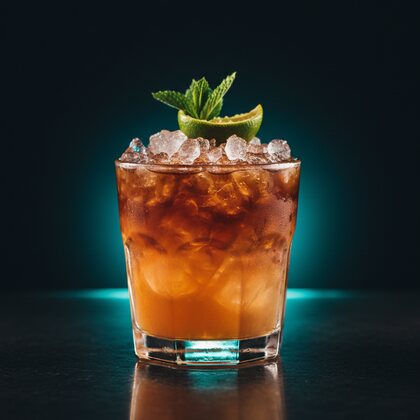
The Mai Tai is the most misunderstood drink on a hotel bar menu. Most guests picture a tall orange glass full of pineapple juice with a paper umbrella. The real thing is a short, strong, almost dry rum sour: two aged rums, a touch of orange curaçao, almond orgeat and fresh lime, shaken hard and poured over a mound of crushed ice. There is no fruit juice in it apart from the lime. It tastes of funky Jamaican rum, toasted almond, bitter orange and sharp citrus, and it finishes clean. A 5-star bar sells it as the drink that proves tiki can be serious. Because orgeat is thick and the rums are heavy, it is also a test of whether a bartender can shake hard enough and cold enough to make a dense drink light on the tongue.
Specification
| Ingredients | Amount | Role in the glass |
|---|---|---|
| Aged Jamaican rum (amber) | 30 ml | The funk. Jamaican pot still rum is rich in esters that give overripe banana, molasses and a wild, grassy edge no other rum has |
| Aged Martinique rum made from molasses | 30 ml | The polish. Rounder and woodier, it tames the Jamaican funk and adds oak and dried fruit. The IBA specifies molasses rhum, though many bars use rhum agricole for a grassier note |
| Orange curaçao | 15 ml | Bitter orange peel and a little sweetness that bridge the rum and the almond. Curaçao, not a sweet triple sec, or the drink turns candied |
| Orgeat syrup (almond) | 15 ml | The signature. A real almond syrup with a whisper of orange flower water gives body, marzipan aroma and a silky texture. Almond flavoured syrup is not a substitute |
| Fresh lime juice | 30 ml | The acid that turns a heavy rum blend into a sour. Squeeze to order; lime juice loses its brightness within a few hours |
| Simple syrup | 7.5 ml | Fine tuning of sweetness. Rich syrup 2:1 works as the original rock candy syrup did. Leave it out if your orgeat is very sweet |
| Crushed ice | Enough to fill the glass and mound above the rim | Chills fast, dilutes the strong blend and gives the drink its tiki look |
Technique
- Fill the double rocks glass with fresh crushed ice and set it asideThe glass and the ice need 1 to 2 minutes to get properly cold before the drink lands. Ice straight from the crusher is wet and melts fast, so let it drain
- Measure with a jigger, in this order: 30 ml lime juice, 7.5 ml simple syrup, 15 ml orgeat, 15 ml orange curaçao, 30 ml Martinique rum, 30 ml Jamaican rumCheapest first, so a mistake costs lime rather than aged rum. Orgeat is thick and sinks; adding it before the spirits stops it clinging to the bottom of the tin
- Fill the shaker two thirds with 3 to 4 cm cubes and shake hard for 10 to 12 secondsOrgeat and two heavy rums need a hard shake to emulsify and aerate. Ten seconds with cubes takes the drink to about -5 °C and adds roughly 20% dilution; the crushed ice in the glass will add the rest. Shake too long and the drink is watery before the guest touches it
- Either strain over the crushed ice in the glass, or, per the IBA, pour shaker and ice straight into the glass (dirty pour)Both are accepted. Straining onto fresh crushed ice gives a cleaner look and lets you control dilution. The dirty pour is faster and is what the IBA describes. Whichever you use, the glass must be full and very cold
- Top with more crushed ice so it mounds 2 to 3 cm above the rimThe mound keeps the surface cold, slows the melt and gives the tiki silhouette. It also gives the garnish something to sit in
- Turn the spent half lime shell upside down on the ice, slap a mint sprig once against your palm and plant it next to the strawThe shell looks like a little island, which is the 1944 garnish. Slapping the mint releases its oils, and placing it by the straw means the guest smells mint on every sip without tasting it in the drink
Service
Origin
Victor J. Bergeron, known to everyone as Trader Vic, said he created the Mai Tai in 1944 at his restaurant Trader Vic's in Oakland, California. Two friends, Ham and Carrie Guild, were visiting from Tahiti. He mixed them a new drink built around a 17 year old Jamaican rum; Carrie took a sip and said Maita'i roa ae, Tahitian for out of this world, the best. The name stuck. His 1944 recipe was 2 oz (60 ml) of that 17 year old Jamaican rum, 1/2 oz (15 ml) orange curaçao, 1/2 oz (15 ml) French orgeat, 1/4 oz (7.5 ml) rock candy syrup and the juice of one lime, about 30 ml, shaken with shaved ice, poured into a double old fashioned glass and finished with the spent lime shell and a sprig of fresh mint. No pineapple juice, no orange juice, no dark rum float. When the 17 year old rum ran out in the 1950s Bergeron moved to a 15 year old, and when that ran out too he blended aged Jamaican rum with Martinique rum to recreate the flavour. That blend is the origin of the two rum split in today's IBA spec. The authorship is disputed. Donn Beach, Don the Beachcomber of Hollywood and the founder of tiki bars, claimed he had made a Mai Tai Swizzle in 1933. His drink was closer to his own Q.B. Cooler, and a long time colleague later said his real claim was that the Mai Tai had been based on that drink. Bergeron defended his authorship for the rest of his life, including a 1970 lawsuit against a company selling a Mai Tai mix, which was settled and is usually cited as recognising him as the originator. In 1953 Bergeron wrote the cocktail menu for the Matson Line hotels in Waikiki, the Royal Hawaiian, the Moana and the Surfrider, which brought the Mai Tai to Hawaii. The Hawaiian version added pineapple juice and orange juice and often a dark rum float, and that is the drink most tourists know. Today the Mai Tai is the emblem of tiki culture and an IBA Contemporary Classic.
Taste and body
The nose is mint and lime from the garnish, then almond and orange. The first sip is funky Jamaican rum, overripe banana and molasses, wrapped in the marzipan roundness of orgeat. Bitter orange peel from the curaçao sits in the middle, and fresh lime cuts through so the finish is dry and clean rather than sweet. Medium to full body from the orgeat, warm alcohol finish of about 30 seconds. The colour is pale amber to light brown, cloudy from the shake, never orange. If it tastes like juice, someone made a Royal Hawaiian, not a Mai Tai.
Pairs well with
- Grilled pineapple with chilli salt
- Char siu pork or Hawaiian style kalua pork
- Coconut prawns or crispy squid
- Poke bowls and tuna tartare
- Salted macadamia nuts and cashews
- Jerk chicken, the Jamaican rum echoes the spice
Hotel bar variations
- Trader Vic's 1944 Mai Tai · The original. 60 ml of a single aged Jamaican rum, 15 ml orange curaçao, 15 ml orgeat, 7.5 ml rock candy syrup and the juice of one lime, about 30 ml, shaken with shaved ice, spent lime shell and mint. Drier and funkier than the IBA two rum spec
- Royal Hawaiian Mai Tai · The Waikiki version from Bergeron's 1953 Matson Line menu. Adds pineapple juice and orange juice and often floats dark rum on top. Fruitier, longer and orange in colour, this is the Mai Tai most tourists expect
- Don the Beachcomber style · Based on Donn Beach's 1933 claim. Multiple rums, lime, grapefruit, falernum, bitters and a touch of absinthe, swizzled long over crushed ice. Most historians treat it as a different cocktail rather than an earlier Mai Tai
- Mai Tai with dark rum float · The IBA spec with 15 ml of aged dark rum poured slowly over the back of a bar spoon so it sits on the surface. The dark layer over pale amber is the visual most guests expect, and the first sip is all rum
- Frozen Mai Tai · The same spec blended with about 150 g of ice for 10 to 15 seconds. Softer, sweeter and colder, common at resort pools. Blending dilutes more, so cut the simple syrup
Common mistakes
- Adding pineapple or orange juice to the IBA or 1944 recipe. That makes a Royal Hawaiian. The original has no fruit juice except lime
- Using almond flavoured syrup instead of real orgeat. The drink loses its marzipan body and orange flower aroma and tastes of cheap candy
- Serving on cubes or a single large rock. A Mai Tai needs crushed ice to get cold enough and to look right; on cubes it is warm and flat
- A soft, short shake. Orgeat is thick and the rums are heavy; anything under 10 seconds leaves the drink dense and under chilled
- Over garnishing with umbrellas, plastic monkeys and three kinds of fruit. In a 5-star bar the garnish is a lime shell, a mint sprig and at most a pineapple spear
Bartender's notes
Manage expectations before you shake. Ask whether the guest wants the original or the fruity resort style, because a guest expecting orange juice will send back a perfect Mai Tai. Batch for volume: rums, curaçao, orgeat and simple syrup can be pre mixed in a bottle at 1 litre and kept in the fridge for a week, then measure 97.5 ml of the batch per drink and add 30 ml of fresh lime to order. Never batch the lime. Slap the mint once, not five times; bruised mint turns bitter. Keep orgeat refrigerated and shake the bottle before every service because the almond oil separates. For a pass of six drinks, shake two tins at a time and strain onto glasses of crushed ice that were filled 2 minutes earlier.
Let the AI bartender pick the right one for you
One photo. The AI reads your mood and chooses from all 20 classics.
Frequently asked questions
What is the official IBA Mai Tai recipe?
30 ml amber Jamaican rum, 30 ml Martinique molasses rhum, 15 ml orange curaçao, 15 ml orgeat syrup, 30 ml fresh lime juice and 7.5 ml simple syrup. Shake with ice and pour into a double rocks glass or a highball. Garnish with a pineapple spear, mint leaves and lime peel. The IBA lists it as a Contemporary Classic.
Who invented the Mai Tai?
Trader Vic, Victor J. Bergeron, said he created it in 1944 at Trader Vic's in Oakland for friends visiting from Tahiti. Donn Beach of Don the Beachcomber claimed a Mai Tai Swizzle from 1933, but his drink was closer to his Q.B. Cooler and a colleague said the real claim was that the Mai Tai was based on it. Bergeron defended his authorship all his life, including a 1970 lawsuit that was settled and is usually cited in his favour.
What does Mai Tai mean?
It comes from the Tahitian phrase Maita'i roa ae, meaning out of this world or the best. Carrie Guild, one of the friends Bergeron mixed the first drink for in 1944, said it after her first sip and the name stuck.
Which rums should I use?
The IBA calls for 30 ml of aged Jamaican rum and 30 ml of aged Martinique rum made from molasses. The Jamaican brings ester rich funk, the Martinique brings oak and roundness. The split exists because Bergeron's original 17 year old Jamaican rum ran out in the 1950s and he recreated the flavour by blending the two.
What is orgeat?
An almond syrup, traditionally made from blanched almonds, sugar and a little orange flower water. It gives the Mai Tai its marzipan aroma and silky body. Use 15 ml of a real almond orgeat, keep it refrigerated and shake the bottle before service. Almond flavoured syrup tastes artificial and thin.
Is a Mai Tai a fruity drink?
No. The 1944 original and the IBA spec contain no fruit juice except 30 ml of fresh lime. It is a strong, nutty, citrus led rum sour. The fruity orange version most people picture is the Royal Hawaiian style from Waikiki in the 1950s, which adds pineapple and orange juice.
How strong is a Mai Tai?
About 17 to 19% ABV after dilution. There are 60 ml of rum in a drink of roughly 150 ml once shaken and served on crushed ice, so it is close to a Margarita and much stronger than a Piña Colada. One of the stronger tiki drinks, best served one at a time.
Should I float dark rum on top?
Not in the original or the IBA spec. The float came with the Hawaiian version. If a guest wants it, pour 15 ml of aged dark rum slowly over the back of a bar spoon so it sits on the surface. It adds about 2% ABV and gives the dark on amber look many guests expect.