Daiquiri
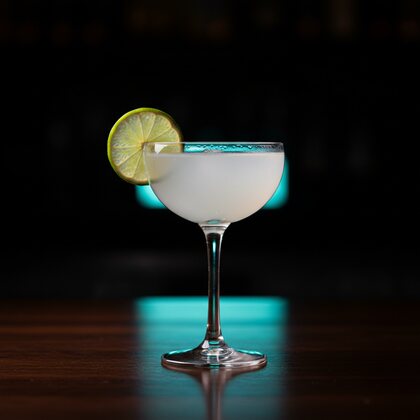
The Daiquiri is the sour every head bartender uses to test a new hire. Three ingredients, white rum, fresh lime and sugar, and nothing to hide behind. There is no bitter to mask a weak shake, no soda to stretch a lazy measure, no cream to cover lime that was squeezed yesterday. It is the drink that proves whether someone understands balance, temperature and dilution, which is why it sits on the training list of hotel bars from Havana to Bangkok. Done right it is a pale, cloudy, ice cold glass that opens sharp and bright on lime, turns to the grassy sweetness of cane rum, and finishes clean and dry in about 15 seconds so the guest wants the next sip. Done wrong it is a warm, sugary limeade, and the guest never orders one from you again. Most guests who say they do not like Daiquiris have only ever met the slush machine version. The classic, shaken hard and served up in a frozen coupe, is one of the most elegant three ingredient drinks in the repertoire.
Specification
| Ingredients | Amount | Role in the glass |
|---|---|---|
| White Cuban style rum | 60 ml | The body of the drink. Light, grassy, slightly sweet cane character at 40% ABV. Aged or spiced rum changes the drink and is not the classic |
| Fresh lime juice | 20 ml | Acid and aroma. Squeezed within 2 to 4 hours, kept at 4 °C. This is the ingredient that makes or breaks the glass |
| Superfine (caster) sugar | 2 bar spoons, about 8 to 10 g | Balances the acid without adding water. Must be dissolved fully before ice goes in. Equivalent to about 15 ml of 2:1 rich syrup, which most hotel bars use for speed and consistency |
| Ice for shaking | 5 cubes of 3 cm, tin filled | Chills to about -5 °C and dilutes by roughly 25%. Dry, hard ice from the freezer, never wet ice from the well |
| Chilled coupe | 150 to 200 ml, from the freezer | No ice in the glass, so the glass itself is the only thing keeping the drink cold for the next 10 minutes |
| Garnish | None in the IBA spec, optional thin lime wheel | The IBA lists no garnish. A single thin lime wheel floated on the surface is the accepted hotel bar touch. Nothing else |
Technique
- Put the coupe in the freezer at least 10 minutes ahead, or fill it with ice and water while you workThe drink is served without ice. A glass at room temperature warms a -5 °C cocktail by several degrees in the first minute and the guest tastes a flat, sweet drink
- Squeeze the lime to order or from a batch no older than 4 hours, measure 20 ml with a jiggerLime juice loses its bright top note and turns bitter and dull within hours. Bottled juice tastes cooked. This is the single biggest quality lever in the drink
- Add 60 ml white rum, 20 ml lime juice and 2 bar spoons of superfine sugar to the shaker tin, then stir until no grains remain, about 15 to 20 secondsThis is the IBA method. Sugar that is not dissolved before the ice goes in stays as grit at the bottom of the coupe and the drink tastes sour on top and sweet at the end. Rich syrup at 15 ml skips this step, which is why hotel bars use it
- Fill the tin with 5 dry 3 cm cubes, seal, and shake hard for 10 to 12 seconds until the tin is painfully cold and frosted on the outsideShaking chills the drink to around -5 °C, adds about 25% water and beats in the tiny air bubbles that give a Daiquiri its pale cloudy look and light texture. A short or soft shake gives a warm, thin, oversweet glass
- Double strain through the Hawthorne strainer and a fine strainer into the frozen coupeThe fine strainer catches ice shards and lime pulp. Shards keep melting in the glass and water down the last third of the drink. A clean surface also looks like hotel service
- Taste the last drop from the tin with a straw before it reaches the guestLimes vary from 5% to 8% acidity through the year. If it is too sharp, the next one gets a little more sugar. Tasting is how the balance is held, not the recipe alone
- Float a thin lime wheel if the house style calls for it, and serve at onceThe drink is at its best for about 3 minutes and acceptable for 10. A Daiquiri that waits at the pass while a tray is assembled is a wasted Daiquiri
Service
Origin
The drink takes its name from Daiquirí, a beach and iron mining district a few kilometres east of Santiago de Cuba. Credit usually goes to Jennings Cox, an American mining engineer working there around 1898, the same year United States troops landed at Daiquirí during the Spanish American War. The story as it is normally told has Cox running out of gin with guests on the way and turning to what was to hand: local white rum, limes and sugar. Treat that as the usual anecdote rather than proven fact. What is better documented is how the drink left Cuba. In 1909 Rear Admiral Lucius W. Johnson, a United States Navy medical officer, tasted it in Cuba and brought it to the Army and Navy Club in Washington DC, which is how the drink crossed to the American mainland. The refinement happened in Havana. Emilio González, known as Maragato, worked on it at the Hotel Plaza, and above all Constantino Ribalaigua Vert, called Constante, made it the signature of El Floridita on the corner of Obispo and Monserrate. Constante shook and blended his Daiquiris with finely crushed frappé ice, adopted the electric blender early, and the Floridita cocktail book of 1937 listed four numbered Daiquiris. The No. 3, with grapefruit juice and maraschino liqueur, became the Hemingway Special or Papa Doble, made for Ernest Hemingway, who asked for it with no sugar and double rum. John F. Kennedy is also recorded as a fan. The International Bartenders Association lists the Daiquiri among The Unforgettables, with a spec of 60 ml white Cuban style rum, 20 ml fresh lime juice and 2 bar spoons of superfine sugar, and lists the Hemingway Special separately under Contemporary Classics.
Taste and body
The first thing on the palate is lime, bright and sharp, followed almost at once by the soft sweetness of cane sugar and the grassy, slightly vanilla note of white rum underneath. The texture is light, almost frothy, from the air beaten in by the shake. The middle is where the 60/20/sugar balance shows: neither ingredient wins, and the rum is there as body rather than heat. The finish is short, dry and clean, about 15 seconds, and it leaves the mouth wanting another sip, which is exactly what a sour is supposed to do. The colour is pale straw white and lightly cloudy. If it is crystal clear, it was not shaken hard enough. If it tastes sweet before it tastes sour, the sugar is too high or the lime is old.
Pairs well with
- Ceviche and other lime cured raw fish
- Grilled prawns with garlic and chilli
- Fried plantain and salted plantain chips
- Fresh oysters on ice
- Fresh goat cheese with a drizzle of honey
- A Cuban sandwich, or coconut based desserts as the last glass of the evening
Hotel bar variations
- Hemingway Special (Papa Doble) · 60 ml white rum, 40 ml fresh grapefruit juice, 15 ml maraschino liqueur, 15 ml fresh lime juice, shaken and served in a large cocktail glass. Grew out of the Floridita Daiquiri No. 3 in the 1930s, made for Ernest Hemingway who wanted no sugar and double rum. Drier and more bitter than the classic. A separate IBA cocktail under Contemporary Classics
- Frozen Daiquiri (El Floridita style) · The same 60/20/sugar formula blended with crushed ice until it stands in a soft mound, served in a coupe with a short straw. This is the drink Constante made famous at El Floridita once electric blenders arrived in the 1930s. Blend for 10 to 15 seconds only, or it turns to slush
- Daiquiri No. 3 (Floridita Daiquiri) · The classic with a few drops of maraschino liqueur and a touch of grapefruit, one of the four numbered Daiquiris in the 1937 Floridita book. The maraschino adds a faint almond and cherry stone note under the lime. The bridge between the classic and the Hemingway Special
- Mulata Daiquiri · Cuban classic built on aged or dark rum instead of white, with a dark cacao liqueur in place of some of the sugar. Rounder, with chocolate and molasses under the lime. Served up or over crushed ice depending on the house
- Strawberry or Banana Daiquiri · The resort and pool bar version. Rum, lime and sugar blended with fresh fruit and crushed ice into a thick frozen drink. Cut the sugar when the fruit is ripe, and use fresh fruit rather than syrup or the drink turns into a dessert
Common mistakes
- Bottled or pasteurised lime juice. It tastes cooked and flat and no amount of rum or sugar fixes it. Fresh only, squeezed within 4 hours
- Too much sugar. Anything over 10 g of sugar or 15 ml of rich syrup against 20 ml of lime turns the drink into limeade and buries the rum
- Under shaking. 5 seconds with a gentle wrist gives a drink at 0 °C with too little air and too little water, so it tastes warm, thin and sweet. 10 to 12 seconds, hard
- Wet ice from the well, or ice that has been sitting in the tin. Meltwater is uncontrolled dilution and the drink comes out watery before it is cold
- Serving in a room temperature glass, or reaching for gold or spiced rum by default. The classic is white rum in a frozen coupe, anything else is a different drink and should be offered as one
Bartender's notes
In a hotel bar the Daiquiri is the drink you use to train and to assess. If a bartender can hold 60 ml rum, 20 ml lime and the right sugar in balance at -5 °C, shift after shift, they can make every other sour on the menu. Lime prep is the operational heart of it: squeeze in small batches every 2 to 4 hours during service, keep the juice in a covered bottle at 4 °C, label it with the time, and throw out anything older. Never squeeze the whole night's lime at 4 pm. For events of 100 to 300 guests, batch the rum and rich syrup ahead (per serve 60 ml rum plus 15 ml syrup, so 6 litres of rum to 1.5 litres of syrup for 100 serves) and keep the batch chilled, then add 20 ml of lime per drink at the shaker, or pre mix lime into a batch no more than 1 hour before service. Shake in pairs of tins to keep the pace. Guests who order a Daiquiri expecting a frozen slush are common at pool bars; ask one question first, shaken and served up, or frozen with fruit, and describe the classic as light, cold and fresh rather than correcting them. Most will try the classic once you have said it in those words, and many will come back for it.
Let the AI bartender pick the right one for you
One photo. The AI reads your mood and chooses from all 20 classics.
Frequently asked questions
What is the official IBA Daiquiri recipe?
60 ml white Cuban style rum, 20 ml fresh lime juice and 2 bar spoons of superfine sugar. Add everything to a shaker, stir until the sugar has dissolved, add ice, shake, and strain into a chilled cocktail glass. The IBA lists it under The Unforgettables and gives no garnish.
Is a Daiquiri sweet?
The classic is not. It is a sour, balanced between 20 ml of lime and about 8 to 10 g of sugar, so it reads sharp and fresh first with just enough sweetness to round the acid. The sweet, slushy version most people know is the frozen fruit Daiquiri, which is a different drink. If a guest finds the classic sweet, the bar is using too much sugar or old lime.
How strong is a Daiquiri?
About 20 to 22% ABV after shaking, since 60 ml of rum at 40% takes on roughly 25% water plus the lime and sugar. That is a step above wine and in the same range as a Margarita. It drinks lighter than it is because it is so cold and sharp, which is worth mentioning to guests ordering a third.
What is the difference between a classic and a frozen Daiquiri?
The classic is shaken hard with cubed ice and strained into a chilled coupe without ice. The frozen version is blended with crushed ice, often with fruit, into a thick slush served with a straw. The frozen style comes from El Floridita in Havana in the 1930s. Same base of rum, lime and sugar, very different texture, temperature and sweetness.
Why is a Daiquiri shaken and not stirred?
Because it contains citrus juice. Anything with juice, egg white or cream is shaken to mix it properly, to chill it fast to around -5 °C, to add about 25% dilution and to beat in air that gives the light, cloudy texture. Stirring would leave it heavy and clear. Spirit only drinks are stirred; sours are shaken.
What is a Hemingway Special?
A Daiquiri variation from El Floridita in Havana: 60 ml rum, 40 ml fresh grapefruit juice, 15 ml maraschino liqueur and 15 ml fresh lime juice, shaken and served in a large cocktail glass. It grew out of the Floridita Daiquiri No. 3 and was made for Ernest Hemingway, who wanted no sugar and double rum, which is why it is also called the Papa Doble. The IBA lists it separately as a Contemporary Classic.
Sugar or syrup, which should the bar use?
The IBA spec uses 2 bar spoons of superfine sugar, about 8 to 10 g, stirred to dissolve before the ice goes in. Most hotel bars use 15 ml of 2:1 rich sugar syrup instead because it dissolves instantly and gives the same result every time. The flavour is the same if the syrup is fresh. Keep syrup refrigerated and use within 2 weeks.
Can Daiquiris be batched for events?
Partly. Batch the rum and syrup together in advance (60 ml rum to 15 ml rich syrup per serve) and keep it chilled; it holds for days. Add the 20 ml of fresh lime per drink at the shaker, or mix lime into the batch no more than 1 hour before service, because lime juice dulls within hours. Shake every drink individually or in double tins. Never pre dilute and pour a Daiquiri from a bottle, it needs the shake for texture.