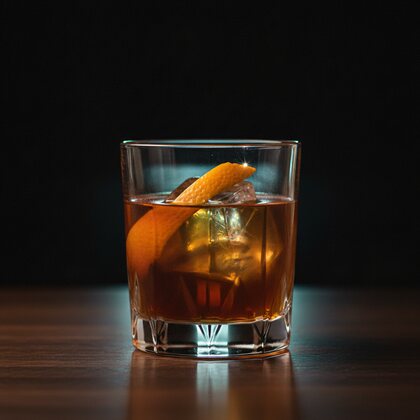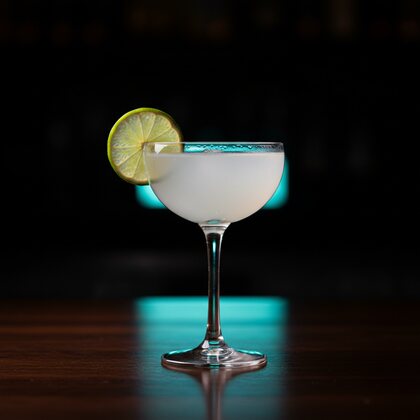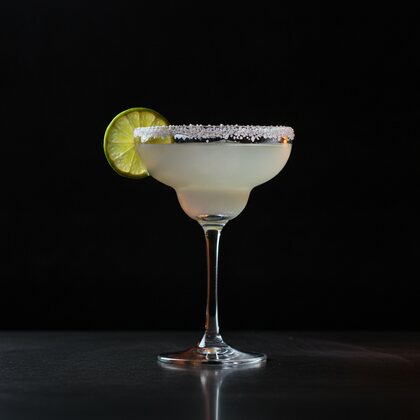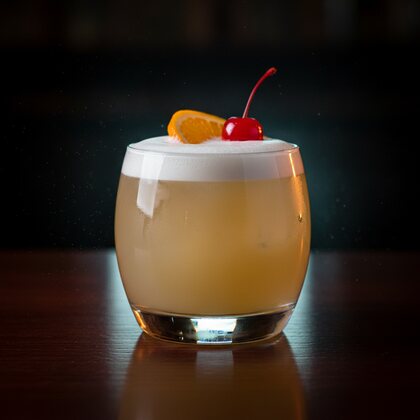
Whiskey Sour
The Whiskey Sour is the drink that teaches a bartender how to shake. Spirit, citrus and sugar, plus an optional egg white, and nothing about it can be done by feel. Squeeze the lemon too early and it tastes dull. Shake for 6 seconds instead of 12 and it arrives warm and thin. Skip the dry shake and the foam collapses before the guest lifts the glass. Done properly it is pale gold with a dense white head, bourbon vanilla on the nose, lemon that hits first and sugar that catches it before it stings. It is the template for the whole sour family: Daiquiri, Margarita and every modern honey or ginger riff follow the same skeleton.
Specification
| Ingredients | Amount | Role in the glass |
|---|---|---|
| Bourbon whiskey | 45 ml | The base. Corn sweetness, vanilla and oak that stand up to lemon. Rye gives a drier, spicier glass |
| Fresh lemon juice | 25 ml | The sour. Squeezed within 4 to 6 hours of service. Old juice is the most common reason a sour tastes flat |
| Sugar syrup 1:1 | 20 ml | The balance. About 10 g of sugar. Rich 2:1 syrup needs only 15 ml |
| Egg white (optional per IBA) | A few drops in the IBA text; hotel bars use 15 ml | Body, a dense white foam and a rounder mouthfeel, almost no flavour. 15 ml of aquafaba does the same job for vegan guests |
| Ice | Shaker three quarters full of 3 cm cubes | Chills and dilutes. Plenty of solid ice cools faster and dilutes less than a handful of wet ice |
| Aromatic bitters | 2 to 3 drops on the foam | Not in the IBA spec, but standard hotel practice. Spice aroma and a visual signature on the head |
| Half orange slice and a cherry | 1 each, the IBA garnish | Colour and a little sweetness. Expressed orange zest is the IBA option and the cleaner choice on foam |
Technique
- Chill the coupe or rocks glass in the freezer, or fill it with ice while you workA shaken drink arrives at about -3 °C. A room temperature glass warms it 3 to 4 degrees before the guest touches it
- Juice the lemons no more than 4 to 6 hours before service and strain out pulp and seedsFresh juice is bright for a few hours, then oxidises and turns dull and slightly bitter. Pulp clouds the drink and kills the foam
- Measure 45 ml bourbon, 25 ml lemon, 20 ml syrup and 15 ml egg white or aquafaba into the small tin, egg white lastEgg last means a bad white costs 15 ml, not the whole drink. Measure everything. A sour is a balance of numbers, not a feeling
- Dry shake, no ice, hard for 10 to 15 secondsWithout ice the egg proteins unfold and trap air, building a fine, stable foam. Cold stiffens the protein before it can stretch, so foam built on ice is coarse
- Open the tin, fill three quarters with 3 cm ice and shake hard for 12 to 15 seconds until the outside frostsThis shake does the chilling and about 25% dilution. Under 10 seconds it is warm and sharp; over 20 it is watery. The frost is your thermometer
- Double strain through a Hawthorne strainer and a fine tea strainer into the chilled glass, or over fresh ice in a rocks glassIce shards and pulp puncture the foam and melt fast. Never pour over the ice you shook with
- Wait 5 seconds for the foam to set, then place 2 to 3 drops of aromatic bitters on the surfaceThe foam needs a moment to firm up or the drops sink. They give the guest a spice aroma before the first sip
- Garnish with a half orange slice and a cherry, or express orange zest over the topThe slice and cherry is the IBA garnish. On a foamed sour many hotel bars prefer zest, because a wet slice on foam looks untidy after 2 minutes
Service
Origin
The sour is older than the cocktail. Its roots are in punch and in the citrus and spirit rations of the British Navy: in 1740 Vice Admiral Edward Vernon ordered his sailors' rum cut with water and encouraged them to add sugar and limes, and the Royal Navy made lemon juice a mandatory part of the ration in 1795. Spirit, citrus and sugar in one vessel is the sour formula, and it came ashore with the sailors. The first printed sour recipes appear in Jerry Thomas's How to Mix Drinks, New York, 1862. The earliest known newspaper use of the phrase whiskey sour is in the Waukesha Plain Dealer of Wisconsin in 1870, mentioned without explanation, so the drink was already ordinary. A rival Peruvian claim says an English ship steward, Elliott Stubb, invented it in the port of Iquique in 1872 with the small local limón de Pica. That story was published by the Universidad del Cuyo in 1962 citing a local newspaper, and historians treat it as doubtful: it postdates the American record by a decade and the source is a century after the event. Egg white crept in during the late 1800s for body and a silky head, a version often called a Boston Sour, though nobody has traced the name. In Chicago in the 1880s bartenders floated a spoonful of claret on top; the Chicago Tribune called the result in 1883 a pleasant looking red headed drink. It went by Continental Sour and Southern Whiskey Sour before the name New York Sour stuck in the 1930s. The International Bartenders Association lists the Whiskey Sour among The Unforgettables at 45 ml bourbon, 25 ml fresh lemon juice, 20 ml sugar syrup and a few optional drops of egg white.
Taste and body
The nose is bourbon first, vanilla, caramel and a little oak, with lemon oil if you expressed zest. On the palate the lemon lands first, bright and sharp, and the syrup catches it within a second so it never stings. The bourbon fills the middle with warmth. With egg white the texture is silky and the acidity feels softer, though the recipe has not changed. The finish is medium, about 20 seconds, ending on oak and citrus pith. Pale gold, slightly hazy, with a white head of about half a centimetre. Flat or bitter means old lemon. Hot means the shake was too short.
Pairs well with
- Fried chicken or Southern style fried food, the acidity cuts the fat
- Barbecue pork ribs and smoked brisket with a sweet glaze
- Aged cheddar and salty hard cheeses
- Salted caramel desserts and pecan pie
- Oysters and raw seafood with lemon
- Spicy Thai or Sichuan dishes, the sugar and foam cool the heat
Hotel bar variations
- Boston Sour · The Whiskey Sour with about 15 ml egg white, dry shaken then shaken with ice. Since the IBA lists egg white as optional, Boston Sour is in practice the name for the foamed version. Nobody has traced who in Boston named it
- New York Sour · A Whiskey Sour, usually with rye, on the rocks with 15 ml dry red wine floated over the back of a bar spoon. Born in Chicago in the 1880s as a claret snap, noted by the Chicago Tribune in 1883, and called Continental Sour before the New York name stuck. The wine floats because it is lighter than the sugared sour
- Gold Rush · 60 ml bourbon, 22 ml lemon, 22 ml honey syrup made 3:1 honey to water, shaken, on a large cube. Created around 2000 at Milk & Honey in New York when regular T.J. Siegal asked owner Sasha Petraske to make his usual bourbon sour with honey syrup instead of simple syrup
- Penicillin · 60 ml blended Scotch, 22 ml lemon, 22 ml honey and fresh ginger syrup, shaken, on a large cube with a 7 ml float of smoky Islay single malt and candied ginger. Created by Sam Ross at Milk & Honey in 2005 as a riff on the Gold Rush, now one of the most travelled new cocktails of this century
- Amaretto Sour · 45 ml almond liqueur, 15 ml cask strength bourbon, 25 ml lemon, 5 ml rich syrup, 15 ml egg white. A 1970s favourite that was too sweet originally; the modern version adds bourbon for backbone
Common mistakes
- Bottled lemon juice or juice squeezed yesterday. Flat, faintly bitter, slightly metallic. Fresh within 4 to 6 hours is the rule
- Skipping the dry shake. The foam comes out coarse and collapses in a minute, leaving a ring of bubbles
- Shaking for 5 or 6 seconds. Warm, hot with alcohol and under diluted. Shake until the tin frosts, 12 to 15 seconds
- Single straining, or pouring over the shaking ice. Ice shards and pulp ruin the texture and it is watery within 3 minutes
- Free pouring the syrup. 5 ml too much and it is lemonade, 5 ml too little and it bites
Bartender's notes
In a hotel bar the Whiskey Sour is your calibration drink. If a new bartender's sour is balanced, their Daiquiri and Margarita will be too, because the skeleton is the same: 2 parts spirit, 1 part citrus, a little under 1 part sugar. Teach 45/25/20 first, then let them move 5 ml either way for the lemons in front of them, because rainy season lemons can be 20% less acidic. For volume, mix fresh lemon and syrup 25:20 at the start of each shift, label the time, discard after 6 hours, and never pre mix the egg white. Keep a can of chickpea water in the fridge; 15 ml of aquafaba dry shakes into a foam most guests cannot tell apart. Always ask which whiskey style they prefer: bourbon gives a rounder sour, rye a drier one.
Let the AI bartender pick the right one for you
One photo. The AI reads your mood and chooses from all 20 classics.
Frequently asked questions
What is the official IBA Whiskey Sour recipe?
45 ml bourbon whiskey, 25 ml fresh lemon juice, 20 ml sugar syrup and optionally a few drops of egg white. Shake with ice, strain into a cobbler glass, or an Old Fashioned glass with ice for on the rocks. Garnish with half an orange slice and a maraschino cherry, or orange zest. Listed under The Unforgettables.
Does a Whiskey Sour have to contain egg white?
No. The IBA lists it as optional. Without it you get a cleaner, sharper drink; with about 15 ml you get a silky texture and a white foam, the version often called a Boston Sour. Always tell the guest when raw egg is used and offer aquafaba.
What is a dry shake and why do it?
Shaking without ice for 10 to 15 seconds before adding ice and shaking again. Without ice the egg proteins stretch and trap air, so the foam is fine and stable. Some bartenders reverse it, ice first then no ice, for an even denser head.
Bourbon or rye?
The IBA spec says bourbon, which gives a rounder, sweeter sour with vanilla and caramel. Rye gives a drier, spicier version. Both are correct. Ask the guest; with no preference use bourbon.
Why must the lemon juice be fresh?
Juice starts to oxidise as soon as it is squeezed. Within a few hours it loses brightness and picks up a dull, slightly bitter edge. Hotel bars juice within 4 to 6 hours of service and never use bottled juice.
How strong is a Whiskey Sour?
Moderate. 45 ml of bourbon at 40% is 18 ml of pure alcohol; after lemon, syrup and about 25% shaking dilution the drink sits at roughly 15 to 17% ABV, closer to a strong wine than a Martini.
What is the difference between a Whiskey Sour and a New York Sour?
A New York Sour is a Whiskey Sour with about 15 ml of dry red wine floated on top. It started in Chicago in the 1880s under names like Continental Sour. The wine adds tannin and a red layer the guest drinks through.
Can I make Whiskey Sours in advance for an event?
Partly. Pre mix bourbon, fresh lemon and syrup at 45:25:20 up to 6 hours ahead and keep it cold. Never batch the egg white. Shake each serving with 15 ml egg white or aquafaba as ordered, 2 drinks per tin at most; a pre foamed sour collapses within 10 minutes.