Piña Colada
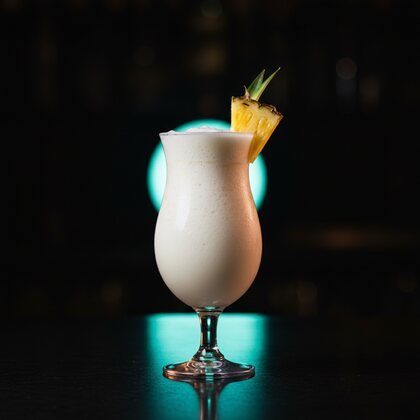
The Piña Colada is the best selling drink at almost every hotel pool bar by the sea, and the one a new bartender gets wrong most often without noticing. It looks like you throw everything into a blender and press a button. In reality you are controlling three variables at once: the weight of ice, which decides the texture; the type of coconut, which decides the body; and the freshness of the pineapple, which decides whether the glass is bright or cloying. Done right it is a pale cream slush, smooth enough to pull through a straw, fresh pineapple on the nose, sweet coconut behind it and the rum sitting quietly at the back. The guest at three in the afternoon is ordering a holiday in a glass. Our job is to deliver it on glass 1 and on glass 80 of the day.
Specification
| Ingredients | Amount | Role in the glass |
|---|---|---|
| White rum | 50 ml | The strength and the frame. Clean cane aroma, no colour and no barrel character to bury the pineapple. The IBA choice |
| Cream of coconut (the sweetened, thick kind) | 30 ml | All the sweetness, richness and body in one ingredient, syrup and cream at once. Not coconut milk |
| Fresh pineapple juice | 50 ml | Acidity, brightness and the soft foam on top. Fresh juice gives a finer texture and far more foam than boxed juice |
| Crushed or small cubed ice | 1 scoop, about 120 to 150 g | Decides the texture. Right, a smooth slush. Too much, a snow cone. Too little, spiked juice |
| Fresh lime juice (optional) | 5 ml, or 2 to 3 drops | The IBA notes that historically a few drops of lime were added to taste. It tightens the sweetness when the pineapple is very ripe |
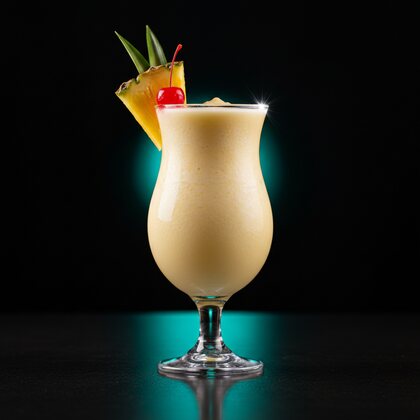
| Pineapple slice, cocktail cherry and a pineapple leaf | 1 of each | The IBA garnish is the slice and the cherry. One leaf adds height. Never more than 3 pieces |
Technique
- Chill the poco grande or hurricane glass in the freezer for at least 10 minutes, or fill it with ice while you set upA blended drink is served below 0 °C. In a warm glass the bottom layer melts to water within 2 minutes
- Shake or stir the can of cream of coconut until uniform before you measure, then jigger 30 mlCoconut fat rises and separates. Skip this and the first drinks from the can are greasy while the last are thin syrup with no body
- Measure 50 ml white rum and 50 ml fresh pineapple juice into the blender jar, then 30 ml cream of coconut. If the pineapple is very sweet, add 5 ml fresh limeLiquids go in before ice so the blades spin freely. 50/30/50 is the IBA spec and must be measured every time. An extra 10 ml of cream of coconut buries the pineapple
- Add 1 scoop of crushed or small cubed ice, about 120 to 150 g, and blend on high for 10 to 15 secondsThe same scoop every time keeps the texture consistent. Over 20 seconds the blades warm the drink and it goes thin. Under 10 seconds leaves chunks
- Stop and check. It should be a smooth slush that flows slowly with no ice chunks. Too thick, add 10 ml pineapple juice. Too thin, add a small handful of ice and blend 5 seconds moreGuests judge a Piña Colada by texture before flavour. Too thick to pull through a straw or thin as juice, both come back
- Pour into the chilled glass to just below the rim. Garnish with 1 pineapple slice on the rim, 1 cherry and 1 pineapple leaf, and add 1 wide strawA standard straw will not draw a thick drink. Three garnish pieces at most reads as hotel bar, not beach shack
- Shaken option for bars without a blender: shake everything hard with cubed ice for 12 to 15 seconds and strain into a glass packed with crushed iceThe original Caribe Hilton method existed both shaken and blended, so both are correct. Shake hard because the cream of coconut is thick and needs to break up against the ice
Service
Origin
The name is Spanish and means strained pineapple. The earliest written mention of a drink called piña colada is in Travel magazine in December 1922, describing a Cuban drink of rum, pineapple juice, lime and sugar with no coconut, closer to a pineapple daiquiri than to today's glass. A legend credits Roberto Cofresí, a Puerto Rican pirate of the early 1800s, with mixing rum, coconut and pineapple for his crew, but there is no evidence for it. The real turning point was commercial cream of coconut, developed by Ramón López Irizarry, an agronomy professor at the University of Puerto Rico, and marketed from around 1948. The Caribe Hilton hotel in San Juan, Puerto Rico, states that its bartender Ramón "Monchito" Marrero created the Piña Colada in 1954 after 3 months of experiments and served it for 35 years. Two competing claims exist: Ricardo Gracía, another Caribe Hilton bartender, said he invented it, and the Barrachina restaurant at 104 Calle Fortaleza in Old San Juan claims Ramón Portas Mingot created it there in 1963, though some historians think the name was popularised there a decade later rather than born there. None of the claims is settled. What is certain: Puerto Rico declared it the national drink in 1978, Rupert Holmes's 1979 hit Escape (The Piña Colada Song) made the name known worldwide, July 10 is National Piña Colada Day in the United States, and the IBA lists it among its Contemporary Classics.
Taste and body
Fresh pineapple on the nose first, with a light toasted coconut note behind it. The first sip is a smooth cold slush that melts on the tongue, sweet and rich from the cream of coconut, then the acidity of the pineapple cuts through so it never turns cloying. The white rum does not stand out; it gives a gentle warmth on the swallow and a clean cane finish of about 20 seconds. Full, creamy body, but it must never feel like eating dessert. The colour should be an even pale cream all the way down. A clear layer at the bottom means the ice has melted or the blend was too short. White specks of fat on top mean the can was not shaken.
Pairs well with
- Grilled or charred prawns with a squeeze of lime, the sweet richness against the salty char of the shell
- Heavily spiced grilled chicken such as jerk chicken or Thai curry paste chicken, the cream of coconut cools the heat
- Som tam or a spicy larb, the cold and the sweetness wash the chilli off the tongue
- Pork satay with peanut sauce, the coconut in the glass and the coconut milk in the sauce speak the same language
- Ceviche or a citrus cured salmon salad, the acidity of the food cuts the richness of the drink
- Grilled pineapple or coconut ice cream, served together as the dessert course
Hotel bar variations
- Virgin Colada · Drop the rum. 100 ml pineapple juice with 30 ml cream of coconut, blended with the same ice, sometimes with 20 ml coconut milk to replace the lost body. The most requested non alcoholic tropical drink at hotel pools
- Chi Chi · White rum replaced by 50 ml of vodka, everything else the same. Cleaner, the cane note disappears and the pineapple and coconut come forward. For a guest who does not like rum
- Miami Vice · Half Piña Colada, half frozen strawberry daiquiri, layered in one glass. It needs two blender jars and both halves must be the same thickness or the layers collapse. A big seller at pool parties
- Painkiller · 60 ml dark rum, 120 ml pineapple juice, 30 ml orange juice, 30 ml cream of coconut, shaken and poured over crushed ice with freshly grated nutmeg on top. Born at the Soggy Dollar Bar on Jost Van Dyke in the British Virgin Islands in the 1970s. The name is a registered trademark of a rum producer in the United States
- Lava Flow · 30 to 45 ml of strawberry purée in the bottom of the glass, then the Piña Colada poured slowly on top so the red streaks up the sides like lava. A Hawaiian creation for the guest who wants a photograph
Common mistakes
- Using coconut milk instead of cream of coconut. Coconut milk is thin and unsweetened, the drink turns watery with no body, and you need another 15 to 20 ml of syrup to get close. Unsweetened coconut cream needs syrup too
- More than 150 g of ice or blending past 20 seconds. A tasteless snow cone that will not pull through a straw, or with too little ice a thin spiked juice. Use the same scoop every time
- Not shaking the can of cream of coconut before measuring. Fat on top, sugar at the bottom, so the first glass from the can is greasy and the last is very sweet with no texture
- Using boxed pineapple juice without adjusting. It is sweeter and flatter, so cut the cream of coconut to 25 ml and add 5 ml fresh lime, or the drink is cloying with no foam
- Over garnishing with an umbrella, half a pineapple, 3 cherries and 2 straws. The guest cannot lift the glass and it looks like a cheap beach bar. Use 1 slice, 1 leaf and 1 cherry
Bartender's notes
On a full pool day a hotel pool bar sells 60 to 100 Piña Coladas in an afternoon, far too many to build one at a time. Batch the base: mix white rum, cream of coconut and pineapple juice at 50/30/50 in 1 litre jugs, about 7 drinks per jug, and hold them in the fridge at 2 to 4 °C. Shake the jug hard before every pour because the coconut fat separates within 15 minutes. Measure 130 ml of base per glass and blend it with ice to order. Never pre-blend with ice: it melts to water within 5 minutes and the texture never comes back. Use up a mixed base the same day, because fresh pineapple juice begins to ferment. Rinse the blender jar with cold water every time you change flavour, especially after strawberry, or the white drink comes out with pink streaks. To upsell, offer a 15 ml float of aged rum on top: an amber layer, barrel and vanilla on the nose, and about 20% on the price. Tell the guest in advance that the drink contains cream of coconut and runs close to 400 ml.
Let the AI bartender pick the right one for you
One photo. The AI reads your mood and chooses from all 20 classics.
Frequently asked questions
What is the official IBA Piña Colada recipe?
50 ml white rum, 30 ml sweetened cream of coconut and 50 ml fresh pineapple juice, blended with ice in an electric blender, poured into a large glass and served with straws, garnished with a slice of pineapple and a cocktail cherry. The IBA adds that historically a few drops of fresh lime were added to taste and that fresh pineapple slices can replace the juice. Category: Contemporary Classics.
Should it be blended or shaken?
Both are correct. The current IBA method blends with ice for 10 to 15 seconds to a smooth slush. The original Caribe Hilton drink existed both ways. Shaken hard for 12 to 15 seconds and poured over crushed ice, it is looser with a thicker head of foam. Most hotel bars blend, because guests expect a frozen texture.
What is the difference between cream of coconut, coconut milk and coconut cream?
Cream of coconut is thick and sweetened, like condensed milk, and it is what this recipe uses. Coconut milk is thin and unsweetened, and a drink made with it is watery with no body. Unsweetened coconut cream is thick but has no sugar, so it needs 15 to 20 ml of syrup before it can stand in. All of them separate in the can and must be shaken before use.
How strong is a Piña Colada?
Not very, even though the glass holds 350 to 450 ml. There is only 50 ml of rum, diluted by juice, cream of coconut and 120 to 150 g of ice that melts into the blend. After blending it sits at about 9 to 11% ABV, close to a glass of wine, but it is sweet and filling, so most guests stop at 1 or 2.
What is a Virgin Colada?
A Piña Colada with the rum left out: 100 ml pineapple juice and 30 ml cream of coconut blended with the same ice, sometimes with 20 ml coconut milk to restore the body. The most requested non alcoholic tropical drink at hotel pools. Make it with the same care; children and non drinkers remember the taste precisely.
Why is it called a Piña Colada?
It is Spanish. Piña means pineapple and colada means strained, so strained pineapple: fresh pressed juice with the pulp strained out. The name first appears in Travel magazine in December 1922 as a Cuban drink with no coconut. The coconut arrived once canned cream of coconut went on sale around 1948.
Who invented the Piña Colada, and why is it disputed?
Three claims. The Caribe Hilton in San Juan says Ramón "Monchito" Marrero created it in 1954 after 3 months of experiments. Ricardo Gracía, another bartender at the same hotel, said it was him. The Barrachina restaurant in Old San Juan says Ramón Portas Mingot made it there in 1963. No contemporary document supports any one side, and the name goes back to 1922 in a recipe without coconut. Everyone agrees that canned cream of coconut, on sale from around 1948, made the drink possible in a bar.
Can I use boxed or canned pineapple juice?
Yes if you have to, but adjust. Boxed juice is sweeter and flatter and does not foam like fresh juice, so cut the cream of coconut to 25 ml and add 5 ml of fresh lime. When possible, press fresh juice in the morning and use it the same day, because it starts to ferment after 24 hours even in the fridge.