Espresso Martini
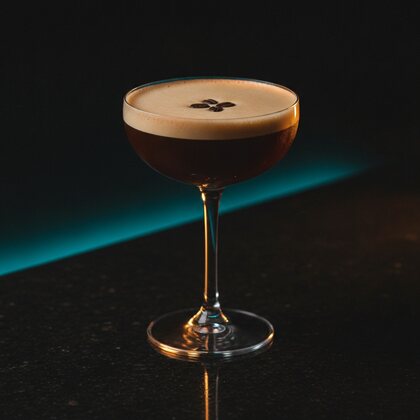
The Espresso Martini is the drink that turns a hotel bar into a coffee bar for 90 seconds. Vodka, coffee liqueur, a little sugar and one freshly pulled espresso, shaken hard on ice and double strained into a chilled glass so that a dense, pale brown foam settles on top and three coffee beans float on it. Everything depends on timing: the espresso must be hot and still carrying its crema when it hits the shaker, because that crema and the coffee oils are what make the foam. Give a guest a version made from coffee that has been sitting for ten minutes and there is no foam, no aroma, just a sweet brown drink. Made properly it is bitter and sweet in the same sip, silky in texture, cold to the point of condensation on the glass, and it has become one of the most ordered cocktails worldwide again in the 2020s. In a hotel bar it is the classic after dinner order, the drink that bridges dessert and a late evening.
Specification
| Ingredients | Amount | Role in the glass |
|---|---|---|
| Vodka | 50 ml | The strength and the clean canvas. A neutral vodka lets the coffee lead; keep it at 40% and pour from a bottle stored at room temperature or lightly chilled, never from the freezer, because ice cold vodka slows the shake and the foam |
| Coffee liqueur | 30 ml | Roasted depth, body and about half of the sweetness. It also carries a little colour so the drink reads dark brown rather than muddy |
| Sugar syrup (1:1) | 10 ml | Rounds the bitterness of the espresso. 10 ml of 1:1 syrup is about 5 g of sugar, enough to balance a properly extracted shot without turning the drink into dessert |
| Fresh espresso | 1 shot, about 30 ml, 18 to 20 g dose, 25 to 30 seconds extraction | The flavour, the aroma and the foam. It must be pulled to order and shaken within 60 seconds while still hot so the crema and dissolved CO2 survive into the shaker |
| Ice | 5 to 6 cubes of about 3 cm, filling two thirds of the shaker | Chills a hot shot down to near 0 °C in seconds and provides the agitation that whips air into the coffee oils. Too little ice and the drink is warm; crushed ice over dilutes |
| Coffee beans | 3 whole roasted beans | Aroma above the foam and the visual signature of the drink. Placed after the foam has settled so they sit on top instead of sinking |
Technique
- Chill the coupe or martini glass in the freezer for at least 10 minutes, or fill it with ice and water while you workA warm glass collapses the foam in under a minute. The whole presentation of this drink is a dense foam on a cold surface
- Pull the espresso last, immediately before shaking: 18 to 20 g of ground coffee, 25 to 30 seconds of extraction, about 30 ml, single or double per house standardFresh crema holds dissolved CO2 and coffee oils. Within 2 to 3 minutes of pulling, most of that gas is gone and the shot will not foam. Old or cooled espresso also tastes stale and sharply bitter
- Measure 50 ml vodka, 30 ml coffee liqueur and 10 ml sugar syrup into the shaker with a jigger, then pour the hot espresso straight inThe IBA spec is written for a shaker; nothing is built in the glass. Pouring the shot in last keeps it hot until the ice arrives and keeps the syrup from sitting on the bottom
- Add 5 to 6 cubes of about 3 cm ice and shake hard for 12 to 15 seconds until the outside of the tin frostsA hard shake does three jobs: it drops a hot shot to about 0 to 2 °C, dilutes it by roughly 20% to reach 18 to 20% ABV, and beats air into the coffee oils and crema to form the foam. Short or gentle shakes give a thin, warm drink with no head. No dry shake is needed here; the crema and oils foam on their own
- Double strain through a Hawthorne strainer and a fine strainer into the chilled glass, holding the tin about 10 cm above the rimIce shards from the hard shake break the foam and float as white flecks. Fine straining gives an even, unbroken head about 1 cm deep, and the drop height helps it rise
- Let the drink settle for 20 seconds, then place three coffee beans in the centre of the foamThe foam firms as the bubbles knit together. Beans placed too early sink straight through. A good head holds for at least a minute, long enough for the drink to reach the table
- Serve at once, straight up, with a short line about the espresso if the guest is interestedThe temperature contrast is the point: hot coffee turned ice cold with a warm aroma still on top. Every 30 seconds on the bar top loses foam and cold
Service
Origin
The Espresso Martini was created by London bartender Dick Bradsell at the Soho Brasserie on Old Compton Street, Soho, in 1983, though some accounts, including his daughter's, place it around 1985. The story Bradsell told is that a young woman asked him for something that would wake her up and then get her going. The coffee machine stood right next to his station, so he pulled a fresh espresso and shook it with vodka, a little sugar syrup and coffee liqueur, then served it on the rocks in a rocks glass with three coffee beans on top. He called it the Vodka Espresso. The name changed in the late 1990s, when the drink began to be served up in the V shaped martini glass during the London fashion for calling every stemmed drink a tini, and it gained wide fame at the bar Match EC1, which opened in September 1997. From 1998 to 2003, while Bradsell worked at Pharmacy, the Damien Hirst designed bar in Notting Hill, the same drink was listed as the Pharmaceutical Stimulant. Bradsell died in 2016, by which time the drink carried his name around the world. The three beans are commonly said to stand for health, wealth and happiness, a tradition borrowed from the way sambuca is served in Italy. The International Bartenders Association lists the Espresso Martini among its New Era drinks, with a spec of 50 ml vodka, 30 ml coffee liqueur, 10 ml sugar syrup and one strong espresso.
Taste and body
The first sip is cold, bitter espresso softened by a silky foam that tastes almost of milk although there is none in the glass. Roasted coffee, dark chocolate and a little caramel come from the liqueur, with the vodka hidden in the clean, dry finish that stops the drink from being cloying. The sweetness should sit just below the bitterness, never above it; if the first word that comes to mind is dessert, the syrup is too high or the shot was under extracted. Body is medium, the finish is medium long and warming for about 20 seconds, and the aroma of fresh coffee should reach the nose before the glass reaches the mouth. Colour: deep brown under a pale, even, cappuccino coloured head of about 1 cm. A dark, patchy or absent head means the espresso was old.
Pairs well with
- Dark chocolate of 70% cocoa or more, the classic match for the bitterness
- Tiramisu, coffee meeting coffee
- Cannoli filled with sweet ricotta
- Affogato, if the guest wants coffee on both sides of the table
- Aged hard cheese such as an 18 to 24 month Parmesan
- Almond biscotti or salted caramel desserts
Hotel bar variations
- Vodka Espresso · The original 1983 serve. The same shaken drink poured over fresh ice in a rocks glass rather than served up. Colder for longer, a little more diluted, and the way Bradsell first made it
- Cold Brew Espresso Martini · 60 ml of cold brew concentrate in place of the espresso. Cold brew has no crema, so build the foam with a reverse dry shake: shake with ice first, strain out the ice, then shake again without it for 10 seconds. Smoother, lower in acidity and far easier to run at a large event without a machine
- Salted Caramel or Vanilla Espresso Martini · 10 ml of a flavoured syrup replaces the sugar syrup. Salted caramel adds a savoury edge that many guests prefer with dessert; vanilla softens the bitterness. Keep it at 10 ml or the drink turns sweet
- Rum or Tequila Espresso Martini · Spirit swap at the same 50 ml. Aged rum is a common hotel bar twist that adds molasses and oak; reposado tequila gives a drier, more vegetal frame. Foam and method are unchanged
- Decaf or Zero Proof Espresso Martini · Decaf espresso with the standard spec for late evening guests. For a zero proof serve, drop the vodka, use 60 ml of fresh espresso or cold brew and 30 ml of a coffee cordial, and shake the same way; the foam still forms from the coffee oils
Common mistakes
- Using cooled or old espresso. The gas and crema are gone after a couple of minutes, so there is no foam and the coffee tastes stale and harshly bitter. Pull the shot last and shake within 60 seconds
- Using instant coffee or a coffee pod with no crema. The drink foams poorly and tastes flat. If there is no machine, use cold brew concentrate and a reverse dry shake instead
- Too much syrup. 10 ml of 1:1 syrup is the spec; 20 ml turns the drink into a dessert and buries the coffee
- Skipping the fine strainer. Ice shards from the hard shake break the foam into a patchy, uneven head and float as white specks
- Shaking too short or too softly, then placing the beans immediately. A short shake gives a warm, thin drink with no head, and beans set down before the foam has settled for 20 seconds sink out of sight
Bartender's notes
In a hotel bar the espresso shot is the quality bottleneck, not the shake, so train staff on the machine before the shaker: 18 to 20 g dose, 25 to 30 second extraction, cleaned group head and a shot pulled only when the shaker is already loaded with vodka, liqueur and syrup. Keep a rack of coupes in the freezer through the evening, because a warm glass undoes everything. For a banquet or a reception of 100 guests you have two workable routes. One, pull espresso in advance, chill it fast in an ice bath so it stops cooking, store it covered and cold, and use it within 2 hours; the foam will be a little lighter than a shot pulled to order, so shake 2 to 3 seconds longer. Two, switch to cold brew concentrate at 60 ml per drink and use a reverse dry shake for the head; it needs no machine and two bartenders can produce 100 drinks in about 40 minutes. Batch the vodka, liqueur and syrup together in advance in the 50/30/10 ratio and pour 90 ml per drink, then add the coffee to order. After 21:00 offer decaf without being asked; many guests want the drink but not the caffeine. Finally, place the three beans in front of the guest and tell the story of health, wealth and happiness; it is a 10 second conversation that guests remember and photograph.
Let the AI bartender pick the right one for you
One photo. The AI reads your mood and chooses from all 20 classics.
Frequently asked questions
What is the official IBA Espresso Martini recipe?
50 ml vodka, 30 ml coffee liqueur, 10 ml sugar syrup and 1 strong espresso. The IBA method is to pour all ingredients into a cocktail shaker, shake well with ice and strain into a chilled cocktail glass. Garnish with 3 coffee beans. The IBA lists it among the New Era drinks.
Why does an Espresso Martini foam?
Fresh espresso carries crema, which holds dissolved CO2 and coffee oils. A hard shake on ice beats air into those oils and traps it as a fine, stable foam. That is why the shot must be hot and fresh; after a few minutes the gas is gone and the drink will not foam. No dry shake is needed with fresh espresso.
Can I make it with cold brew instead of espresso?
Yes. Use about 60 ml of cold brew concentrate in place of the shot. Cold brew has no crema, so build the head with a reverse dry shake: shake with ice, strain the ice out, then shake again for 10 seconds without ice. It is smoother, less acidic and much easier for events without an espresso machine.
How strong is an Espresso Martini?
After a hard shake on ice it sits around 18 to 20% ABV. That is lighter than a Dry Martini, which is close to 30%, but stronger than the sweet, creamy taste suggests. Roughly the strength of a glass of fortified wine, in a 120 ml serve.
Does it have a lot of caffeine?
About as much as one espresso, roughly 60 to 80 mg, since the drink contains exactly one shot. The coffee liqueur adds very little. Hotel bars often suggest it after dinner and can make it with decaf espresso on request.
Why three coffee beans?
Tradition says the three beans stand for health, wealth and happiness, a custom borrowed from the way sambuca is served in Italy. Bradsell used three beans on the original Vodka Espresso in 1983. Place them after the foam has settled for about 20 seconds so they float instead of sinking.
Which glass should it be served in, and does it take ice?
A chilled coupe or V shaped martini glass of 150 to 200 ml, served straight up with no ice in the glass. The glass must be cold; a warm glass collapses the foam within a minute. The original Vodka Espresso was served over ice in a rocks glass, and that is still a valid variation.
Can it be batched for events?
Partly. Pre mix the vodka, coffee liqueur and sugar syrup in a 50/30/10 ratio and pour 90 ml per drink, but add the coffee at the last moment. For 100 guests either pull espresso ahead, chill it fast in an ice bath and use it within 2 hours, or switch to 60 ml of cold brew concentrate with a reverse dry shake for the foam. Each drink is still shaken individually, so plan on about 40 minutes for two bartenders.