Cosmopolitan
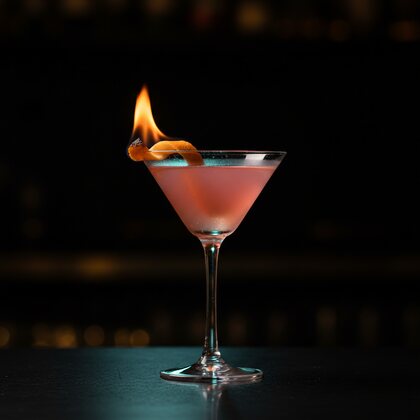
The Cosmopolitan is the drink that proves a hotel bar can make a sour properly. Underneath the pink colour and the celebration reputation it is a vodka Daisy: spirit, orange liqueur, fresh citrus and a splash of fruit, shaken hard and served straight up in a chilled cocktail glass. There is nowhere to hide. Too much cranberry and it turns into opaque red juice, too little shake and it arrives warm and thin, bottled lime and the whole glass tastes of the bottle. Done right it is pale translucent pink, ice cold at about -5 °C, tart before it is sweet, with lemon or orange oil on the nose and a clean, short finish that asks for a second sip. It is the drink guests order for birthdays, anniversaries and the first night of a holiday, which is exactly why every bartender on the team must be able to make it identically at 6 pm and at midnight.
Specification
| Ingredients | Amount | Role in the glass |
|---|---|---|
| Citrus vodka (lemon flavoured vodka) | 40 ml | The base. Clean strength with a lemon zest lift that ties the lime and the orange liqueur together. Plain vodka works but the drink loses its aromatic top note |
| Triple sec style orange liqueur | 15 ml | Sweetness and bitter orange peel aroma. At 15 ml it balances 15 ml of lime exactly; this is the sour backbone of the drink |
| Fresh lime juice | 15 ml | Acidity and brightness. Squeezed the same day, never bottled. Lime is what stops the cranberry from tasting like fruit punch |
| Cranberry juice | 30 ml | Colour, tannin and a light tartness. It is a modifier, not the base. Know whether your bottle is unsweetened juice or sweetened cranberry cocktail, because they need different balancing |
| Ice | 5 to 6 cubes of 3 cm, shaker filled | Chills to about -5 °C and dilutes by about 25% during a hard shake. Small or wet ice over dilutes before the drink is cold |
| Lemon twist (IBA) or orange peel for flaming | 1 strip, 2 by 6 cm | Expressed oils on the surface are the first thing the guest smells. The flamed orange peel adds caramelised orange and a moment of theatre |
Technique
- Put a 200 to 250 ml cocktail glass in the freezer at least 10 minutes ahead, or fill it with ice and water while you workA straight up drink has no ice in the glass to keep it cold. A room temperature glass warms the drink by 3 to 4 °C in the first minute and it tastes flat and sweet
- Squeeze the lime to order and measure 40 ml citrus vodka, 15 ml orange liqueur, 15 ml fresh lime and 30 ml cranberry with a jigger into the small tinThe 40/15/15/30 ratio is the whole balance of the drink. Free pouring cranberry is the number one reason Cosmopolitans come out red and juice like
- Fill the large tin with 5 to 6 dry cubes of about 3 cm, seal and check the sealA full shaker chills faster and dilutes less than a half empty one. Meltwater in the ice is uncontrolled dilution, so shake off any wet ice first
- Hard shake for 10 to 12 seconds until the tin is frosted and painful to holdJuice drinks are shaken, not stirred: the shake chills to about -5 °C, dilutes by about 25% and aerates the citrus so the texture is lively. Under 8 seconds the drink is warm and harsh; over 15 it is watery
- Double strain through a Hawthorne strainer and a fine strainer into the chilled glassIce shards and lime pulp cloud the drink and melt on the surface, changing the balance in the first minute. The Cosmopolitan should look pale translucent pink and clean
- Check the colour against the light before garnishing: pale pink you can see through, never opaque redColour is the fastest quality check. Opaque red means too much cranberry or a heavily sweetened cranberry cocktail, and the guest will taste it before you can fix it
- Express a lemon twist over the surface and drop it in (IBA), or flame an orange peel: hold the peel skin side down about 5 cm above the drink, warm it with a lighter for 2 seconds, then squeeze so the oils flash through the flameThe oils are the first aroma the guest meets. The flamed peel, popularised by Dale DeGroff, adds a caramelised orange note and is the visible moment that makes a hotel bar Cosmopolitan feel special
Service
Origin
The origin of the Cosmopolitan is disputed, and an honest bar historian says so up front. The name appears first in 1934, when the book Pioneers of Mixing at Elite Bars 1903 to 1933 printed a Cosmopolitan Daisy of gin, orange liqueur, lemon juice and raspberry syrup: a pink Daisy that shares the name and the idea, but not the vodka or the cranberry, so it is an ancestor rather than the same drink. The modern claims begin with Neal Murray, who says he created it in 1975 at the Cork & Cleaver steakhouse in Minneapolis by adding cranberry juice to a Kamikaze. Cheryl Cook, head bartender at The Strand on Washington Avenue in South Beach, Miami, says she built hers around 1985 to 1986 with the new citrus flavoured vodka, a splash of triple sec, a dash of lime cordial and just enough cranberry to make it pink; drinks historian Gary "Gaz" Regan supports her account, though the citrus vodka she cites was only officially released in 1988. The recipe the world now recognises comes from Toby Cecchini, working with Melissa Huffsmith-Roth at The Odeon in Tribeca, Manhattan, in 1988 (his own book says 1988, some accounts say 1989). Handed a poorly described version of the Miami drink, he rebuilt it with fresh lime juice and a proper orange liqueur. Dale DeGroff put it on the menu at the Rainbow Room in New York in 1996 with a flamed orange peel and pushed it further into hotel bar culture, though he has always rejected the claim that he invented it. The television series Sex and the City, 1998 to 2004, made it a global phenomenon. The International Bartenders Association lists it among the Contemporary Classics.
Taste and body
The first sip is bright lime and a cool clean spirit lift from the citrus vodka, then the orange liqueur fills the middle with soft sweetness and marmalade bitterness. Cranberry sits underneath as a light tannic tartness rather than a fruit flavour, and it is what keeps the finish short and dry. Body is light to medium, texture is lively from the shake, and the temperature should make the guest pause. On the nose it is lemon oil, or toasted orange if the peel was flamed. A correct Cosmopolitan is sour first and sweet second; if the first word that comes to mind is sweet, the cranberry or the liqueur is out of proportion.
Pairs well with
- Sushi and sashimi, the lime and cranberry acidity refresh the palate between pieces
- Fresh oysters and a classic prawn cocktail
- Goat cheese salad with beetroot or berries
- Duck breast with a cherry or berry sauce
- Dark chocolate, 70% or higher, at the end of the evening
- Thai style spicy seafood salad (yam talay), the cold sour drink cools the chilli
Hotel bar variations
- White Cosmopolitan · Same 40/15/15/30 build with white cranberry juice in place of red. Clear, pale straw coloured and slightly softer in tannin. Hotel bars use it for guests who want the drink without the pink glass, and it photographs well against dark bar tops
- Kamikaze · The ancestor. Vodka, triple sec style orange liqueur and fresh lime, typically in equal parts, shaken and served straight up or as a shot. Add cranberry to a Kamikaze and you have the Cosmopolitan as Neal Murray describes it
- Cosmopolitan with fresh cranberry cordial · Craft bar version: replace the 30 ml of juice with 20 to 25 ml of a house cordial made from fresh cranberries simmered with sugar and a little citric acid, then strained. Deeper colour, more tannin and a menu story the bartender can tell
- Metropolitan · A 1990s New York variant that swaps the citrus vodka for a currant flavoured vodka. Darker, berry led, less lemon lift. Everything else stays the same, shaken and straight up
- Sparkling Cosmo · Shake the standard recipe with slightly less dilution (8 seconds), strain into a coupe and top with 30 ml of dry sparkling wine. Lighter and fizzy, a reception and celebration serve that stretches the spirit for large events
Common mistakes
- Too much cranberry. Over 30 ml, or free poured, and the drink turns opaque red and tastes like juice. The Cosmopolitan is a sour with a splash of colour, not a cranberry drink
- Not balancing sweetened cranberry cocktail against unsweetened juice. If the bottle is a sweetened cocktail, cut it to 25 ml or add 5 ml more lime; if it is pure unsweetened juice, 30 ml is correct. Taste the bottle when it changes
- Bottled lime juice. It tastes cooked and metallic and the guest notices immediately in a drink this simple. Squeeze fresh and discard after 4 hours
- Under shaking and a warm glass. Eight seconds of a lazy shake into a room temperature glass gives a drink at 3 to 5 °C that tastes sweet and harsh. Shake 10 to 12 seconds, hard, into a frozen glass
- Garnish without expressed oils, or plain vodka without adjusting. Dropping a twist in unexpressed loses the aroma; using plain vodka without adding a wider lemon twist or 5 ml more lime loses the citrus top note the recipe is built on
Bartender's notes
In a hotel bar the Cosmopolitan is a celebration order, so read the table before you shake. If the guest says sweeter or drier, adjust the cranberry between 25 and 35 ml and never the liqueur, because the liqueur to lime ratio is what holds the drink together; more liqueur makes it syrupy, less makes it sharp. The flamed orange peel is your moment of theatre: do it in front of the guest, 5 cm above the glass, and the whole table watches. For events all four ingredients batch well. Combine vodka, liqueur and cranberry in advance, add the lime last and no earlier than 4 hours before service, and hold the batch at 4 °C in the fridge. Shake single serves of 100 ml to order for the best texture, or for very large parties add 20% water by volume, keep the batch in the freezer and pour straight into frozen glasses. Upsell by offering a house cranberry cordial version at a premium: it costs a few baht more per glass, tastes noticeably better and gives the bartender a story to tell.
Let the AI bartender pick the right one for you
One photo. The AI reads your mood and chooses from all 20 classics.
Frequently asked questions
What is the official IBA Cosmopolitan recipe?
40 ml citrus flavoured vodka, 15 ml triple sec style orange liqueur, 15 ml fresh lime juice and 30 ml cranberry juice. Add all ingredients to a shaker filled with ice, shake well and strain into a large cocktail glass. Garnish with a lemon twist. The IBA lists it among the Contemporary Classics.
What colour should a Cosmopolitan be?
Pale translucent pink that you can see through when held to the light. Opaque red means too much cranberry or a heavily sweetened cranberry cocktail. The White Cosmopolitan, made with white cranberry juice, is clear and pale straw coloured.
Is a Cosmopolitan sweet, and how strong is it?
Made to the IBA spec it is sour first and lightly sweet second, closer to a Margarita than to a fruit punch. After a hard shake it sits at about 18 to 20% ABV, lighter than a Martini or Negroni but still a proper spirit forward drink, so hotel bars serve water alongside.
Why is a Cosmopolitan shaken and not stirred?
It contains fresh lime and cranberry juice. Juice drinks are shaken because the shake chills them to about -5 °C, dilutes them by about 25% and aerates the citrus for a lively texture. Stirring would leave it warm, heavy and flat. Double strain afterwards so no ice shards or pulp reach the glass.
Lemon twist or flamed orange peel?
The IBA garnish is a lemon twist, expressed over the surface and dropped in. The flamed orange peel, popularised by Dale DeGroff, is the hotel bar showpiece: warm the peel skin side down about 5 cm above the drink and squeeze so the oils flash through the flame, adding a caramelised orange aroma. Both are correct; the flame is theatre.
Who invented the Cosmopolitan?
It is disputed. A Cosmopolitan Daisy of gin, orange liqueur, lemon and raspberry syrup was printed in 1934. Neal Murray claims 1975 in Minneapolis by adding cranberry to a Kamikaze. Cheryl Cook claims around 1985 to 1986 at The Strand in South Beach, Miami. The recognised modern recipe is Toby Cecchini's from The Odeon, New York, 1988, and Dale DeGroff popularised it at the Rainbow Room in 1996 without claiming to have invented it.
What glass is a Cosmopolitan served in?
A large cocktail glass of 200 to 250 ml, martini or coupe, frozen for at least 10 minutes. It is served straight up with no ice in the glass, which is why the chilled glass matters: without it the drink warms 3 to 4 °C in the first minute. A coupe is more stable on a tray for events.
Can a Cosmopolitan be batched for events?
Yes. Combine citrus vodka, orange liqueur and cranberry in the 40/15/30 ratio in advance and add fresh lime (15 ml per serve) no more than 4 hours before service. Hold at 4 °C and shake 100 ml portions to order. For very large parties add 20% water by volume, store in the freezer and pour directly into frozen glasses.