Virgin Mary
The Virgin Mary is the one drink on a hotel breakfast and brunch menu that separates a bar that takes non alcoholic service seriously from one that does not. Pour cold tomato juice over ice and add a celery stick and you have a glass of juice. Season it properly, roll it between two tins until it is silky and 4 °C, salt the rim and build the garnish with intent, and you have a drink that a guest will order again tomorrow. Hotel bars treat this category with the same care as cocktails for a simple reason: a large share of the room is not drinking. The guest who is driving to a meeting after breakfast, the pregnant guest, the Muslim family at Sunday brunch, the wellness traveller who trains in the morning, the teenager who wants what the adults are having. They all pay the same brunch price and they notice the difference between a thought out drink and a consolation prize. The Virgin Mary is savoury, spicy, cold and satisfying in a way that no sweet mocktail is, which is why it has been the default morning drink of hotel restaurants for decades.
Specification
| Ingredients | Amount | Role in the glass |
|---|---|---|
| Tomato juice, chilled, 100% not from concentrate | 180 ml | The body and the whole point. Good tomato juice tastes of ripe fruit with natural sweetness and acidity; thin or cooked tasting juice cannot be fixed with seasoning. The extra 30 ml compared with a Bloody Mary replaces the vodka volume |
| Fresh lemon juice | 15 ml | Acidity that lifts the tomato and keeps the drink from tasting like soup. Squeeze it that day; bottled lemon juice tastes flat and metallic |
| Worcestershire sauce | 4 dashes, about 3 ml | Umami, tamarind sweetness and a little fermented depth. Note that most versions contain anchovy, so keep an anchovy free bottle for vegetarian guests |
| Hot sauce, cayenne and vinegar style | 3 to 4 dashes, about 1.5 ml | Heat and vinegar sharpness. Start low; the guest can always ask for more and never for less |
| Fresh horseradish, finely grated | 1 bar spoon, about 5 g | The nose tingling heat that separates a hotel Virgin Mary from a bottled mix. Prepared horseradish from a jar works at 1.5 bar spoons |
| Celery salt and freshly ground black pepper | 2 pinches celery salt (about 1 g), 2 turns of the mill | Salt makes tomato taste more like tomato; celery seed adds a green savoury note; pepper adds warmth on the finish |
| Ice | Cubed, 3 to 4 cm, two thirds of the glass | Chills to serving temperature during the roll. Large cubes dilute slowly; crushed ice turns the drink watery within minutes |
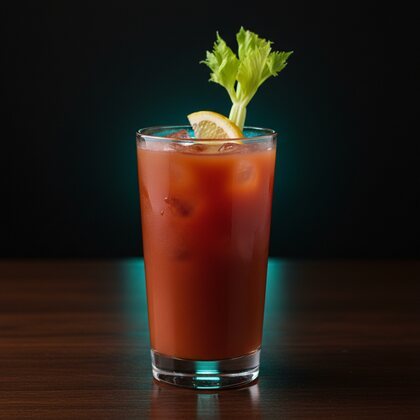
| Garnish | 1 celery stalk with leaves, 1 lemon wedge, half rim of celery salt | The celery is a stirrer and a snack. The half rim lets the guest choose a salted or unsalted sip |
Technique
- Rim half the glass: wipe a lemon wedge around half the outside rim, then roll that half in celery salt on a saucerSalt on the outside only keeps it off the lips of a guest who does not want it and out of the drink. Half a rim gives the guest a choice with every sip
- Season in the tin first, without ice: tomato juice, lemon, Worcestershire, hot sauce, horseradish, celery salt and pepper. Stir once and taste with a strawTomato juice varies from carton to carton in sweetness and salt. Tasting before ice is added means you adjust the seasoning, not the dilution. This is the single habit that makes a consistent Virgin Mary
- Fill the tin two thirds with cubed ice and roll: pour the drink from one tin to the other 5 to 6 times, holding the tins about 30 cm apartRolling, also called throwing, chills the drink to about 4 °C and blends the seasoning without beating air into it. Shaking whips tomato juice into a pale pink foam, thins the texture and makes it taste watery. Tomato is the one juice you never shake
- Fill the serving glass with fresh cubed ice and strain the drink over it with a Hawthorne strainer, leaving the rolling ice behindFresh ice in the glass keeps the drink cold for the 15 to 20 minutes a brunch guest takes to finish it. The rolling ice has already given up its cold and would dilute quickly
- Garnish: stand the celery stalk against the rim with the leaves up, perch the lemon wedge on the rim, add a straw if the guest wants oneThe celery doubles as a stirrer because the horseradish and pepper settle over time; the guest can wake the drink up without asking. The lemon wedge lets them add acidity to taste
- Ask the guest how much heat they want, mild, medium or hot, before you build, and note it for the refillHeat tolerance is personal and cannot be undone once the hot sauce is in. A guest who has to send back a drink that is too spicy at 9 am will not order a second
Service
Origin
The Virgin Mary is the Bloody Mary without the vodka, so its history is the Bloody Mary's history, and that history is contested. French bartender Fernand Petiot claimed he first mixed vodka and tomato juice in equal parts in 1921 at the New York Bar in Paris, later renamed Harry's New York Bar. The claim rests on his own account given decades later, and historians point out that vodka was scarce in Paris in 1921 and that commercial tomato juice was still new. A competing claim belongs to the entertainer George Jessel, who said he invented the drink as a hangover cure in the late 1920s; the first appearance in print is a 1939 Lucius Beebe gossip column describing Jessel's pick me up as half tomato juice, half vodka. What is documented is that Petiot moved to the King Cole Bar of the St. Regis hotel in New York in 1934 and there turned the plain mix into the seasoned drink we know, adding salt, black pepper, lemon, Worcestershire sauce and hot sauce, and often using gin because vodka was hard to find. The hotel considered the name Bloody Mary too crude for its guests and renamed it the Red Snapper, a name the St. Regis still uses. Petiot himself told The New Yorker in 1964 that Jessel may have started it but it was nothing but vodka and tomato juice when he took it over. The name's origin is equally unsettled: Queen Mary I of England, a waitress called Mary at a Chicago bar named the Bucket of Blood, and the actress Mary Pickford have all been proposed, none with proof. The alcohol free version followed the drink into hotel dining rooms as brunch became an institution in the second half of the 20th century. Its name follows the convention of calling a spiritless version virgin; in Britain and Australia it is also called a Bloody Shame, and occasionally a Bloody Virgin. Today the International Bartenders Association lists the Bloody Mary in its Contemporary Classics with 45 ml vodka, 90 ml tomato juice, 15 ml lemon juice, Worcestershire sauce, hot sauce, celery salt and pepper, and every good hotel bar keeps a Virgin Mary on the morning menu built to the same standard.
Taste and body
The first impression is cold, ripe tomato with a savoury saltiness, followed by the sharp lift of lemon and the vinegar edge of the hot sauce. Horseradish arrives a second later in the nose rather than on the tongue, then black pepper warms the finish. Umami from the Worcestershire sits underneath everything and makes the drink feel like food. The texture should be smooth and full, coating the mouth lightly, never foamy or thin. Colour is deep opaque red, not pink; pink means it was shaken. The finish is long, peppery and slightly sweet from the tomato, and it makes you hungry, which is exactly what a brunch drink should do.
Pairs well with
- Eggs Benedict and hollandaise, the acidity cuts the butter
- Smoked salmon on a bagel with cream cheese and capers
- Fresh oysters and shellfish; the drink is essentially a mignonette
- Crispy bacon, hash browns and a full cooked breakfast
- Fried chicken and waffles; heat and umami stand up to the batter
- Aged cheddar, olives and cured meats at a lazy lunch
Hotel bar variations
- Bloody Mary · The parent. Add 45 ml vodka to the same seasoned base, per the IBA spec of 45 ml vodka to 90 ml tomato juice. The Virgin Mary is built identically with the vodka volume replaced by tomato juice, so a bar that masters one has mastered both
- Virgin Caesar · The Canadian version, created in Calgary in 1969, uses clam and tomato juice instead of plain tomato juice and rims the glass with celery salt. Brinier and lighter in body. Omit the vodka and you have the brunch standard of every hotel in Canada
- Virgin Maria · The Mexican direction: swap lemon for 20 ml fresh lime, use a chipotle or habanero hot sauce, add 20 ml fresh orange juice and rim with chilli salt. Brighter, fruitier and smokier. Serve in a Collins with a lime wheel and a cucumber spear
- Green Mary · Tomatillo or green tomato juice, cucumber juice, lime, green hot sauce, coriander and a pinch of salt. Lighter and more herbal, and a striking pale green in the glass. Good for guests who find red tomato juice heavy in the morning
- Asian Virgin Mary · Tomato juice seasoned with 5 ml soy sauce in place of Worcestershire, 10 ml yuzu juice in place of lemon, a pea sized amount of wasabi instead of horseradish and 2 drops of toasted sesame oil. Garnish with a shiso leaf. A hotel bar in Tokyo or Bangkok can make this its signature morning drink
Common mistakes
- Shaking instead of rolling. Tomato juice foams, turns pale pink and tastes thin. Roll between two tins 5 to 6 times, or stir in the glass if you have no second tin
- Serving it too cold or on crushed ice. Below 4 °C the spice and umami disappear, and crushed ice waters it down before the guest finishes the first third
- Using tomato juice from concentrate or a pre made mix and hoping seasoning will fix it. The cooked, metallic base shows through everything. Buy the best 100% tomato juice you can and keep it at 4 °C
- Over garnishing. A celery stalk, a lemon wedge and perhaps an olive is a drink. A skewer of bacon, prawns, cheese cubes and a slider is a buffet on a stick that falls into the glass
- Seasoning by habit instead of tasting. Every carton of tomato juice differs. Taste the base with a straw before the ice goes in, every single time
Bartender's notes
For a brunch of 100 or more, batch the seasoned base the evening before and keep it at 4 °C: 1 litre tomato juice, 80 ml fresh lemon juice, 20 ml Worcestershire sauce, 10 ml hot sauce, 25 g grated horseradish, 6 g celery salt and 2 g black pepper. That makes about 6 drinks at 180 ml. Stir the container well before each pour because the horseradish and pepper settle, and use it within 24 hours; after that the lemon fades and the horseradish loses its bite. Season mild in the batch and offer hot sauce on the side so one base serves every heat preference. Keep a written note of which Worcestershire you use: most contain anchovy, so a vegetarian or vegan guest needs an anchovy free bottle, and a guest who asks about halal should be told what is in it. A small garnish station at the buffet, with celery, lemon, olives, cornichons, cherry tomatoes and pickled chillies, lets the guest finish the drink themselves and sells more of them than any menu description. Finally, remember that the Virgin Mary is usually the first thing a guest tastes in your hotel that day. Build it with the same care as a Negroni at 8 pm.
Let the AI bartender pick the right one for you
One photo. The AI reads your mood and chooses from all 20 classics.
Frequently asked questions
What is the difference between a Virgin Mary and a Bloody Mary?
Only the vodka. A Bloody Mary per the IBA spec is 45 ml vodka, 90 ml tomato juice, 15 ml lemon juice, Worcestershire sauce, hot sauce, celery salt and pepper. A Virgin Mary uses the same seasoned base with the vodka replaced by tomato juice, so it contains no alcohol at all.
Does a Virgin Mary contain any alcohol?
No. It is 0% ABV. Tomato juice, lemon juice, Worcestershire sauce, hot sauce and seasoning contain no alcohol, which is why it is suitable for drivers, pregnant guests, children and guests who do not drink.
Why is it rolled instead of shaken?
Shaking beats air into tomato juice and turns it into a pale pink foam with a thin, watery texture. Rolling, pouring the drink between two tins over ice 5 to 6 times, chills it to about 4 °C and blends the seasoning while keeping the texture smooth and the colour deep red.
Which tomato juice should a hotel bar use?
100% tomato juice that is not from concentrate, kept at 4 °C and opened fresh each service. Juice from concentrate tastes cooked and metallic and no seasoning hides it. Freshly pressed tomato juice is excellent but must be used within 24 hours and strained of seeds and skin.
Can a Virgin Mary be made in advance for brunch?
Yes. Batch the seasoned tomato base the evening before, keep it at 4 °C and use it within 24 hours. Stir before every pour because horseradish and pepper settle. Add ice and garnish per glass at service, never in the batch.
How spicy should it be?
Mild by default: 3 to 4 dashes of hot sauce and a bar spoon of horseradish in 180 ml of tomato juice. Ask the guest before building and offer hot sauce on the side. Heat can be added at the table but never removed.
Why do some bars call it a Bloody Shame or a Red Snapper?
Bloody Shame is the British and Australian nickname for the alcohol free Bloody Mary. Red Snapper is the name the St. Regis hotel in New York gave the Bloody Mary in 1934 because it thought Bloody Mary sounded too crude for its guests; the Red Snapper is usually made with gin.
Is the celery salt rim necessary?
Not necessary, but it is the hotel bar touch that makes the drink feel finished. Salt makes tomato taste sweeter and more like tomato. Rim only half the glass on the outside so the guest can choose a salted or unsalted sip and no salt falls into the drink.