Moscow Mule
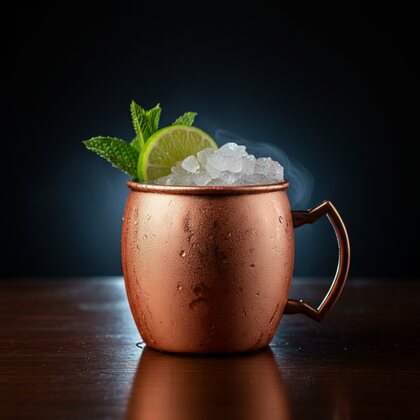
The Moscow Mule is the drink that taught America to drink vodka, and in a hotel bar it is the fastest high volume cocktail you will make all night. Three ingredients built straight in the mug, no shaker, no strainer, ready in under 40 seconds, yet it is easy to serve badly. Warm ginger beer, ice that has sat in the well, a mug filled halfway, or ten enthusiastic turns of the spoon and the guest gets a flat, sweet, lukewarm glass. Done right it is a frosted copper mug beaded with condensation, a sharp hit of ginger and lime on top of clean vodka, and enough carbonation to lift the whole thing. It belongs to the buck family, spirit plus ginger beer plus citrus, and it is the vodka member of that family. At 8 to 10% after dilution it drinks like a strong beer, which is exactly why it sells from lunchtime to last orders.
Specification
| Ingredients | Amount | Role in the glass |
|---|---|---|
| Vodka | 45 ml | The base. A neutral, clean 40% vodka gives strength without flavour so the ginger and lime lead. This is the only spirit in the glass |
| Ginger beer | 120 ml | Flavour, heat and all the carbonation. Must be cold, about 4 °C, and freshly opened. It is 70% of the liquid, so the quality of the ginger beer is the quality of the drink |
| Fresh lime juice | 10 ml | Acidity that cuts the sugar in the ginger beer and sharpens the ginger. Squeezed the same day; bottled lime tastes cooked |
| Ice | 3 cm cubes or crushed ice, mug filled to the top | Chills the mug through its copper walls and slows dilution. A full mug is also what makes the copper frost over |
| Lime slice or wedge | 1 piece | The IBA garnish. A wedge squeezed and dropped in adds a second small dose of acid and lime oil at the rim |
Technique
- Fill the copper mug to the top with 3 cm cubes or crushed ice and let it sit for 20 to 30 seconds while you gather bottles, then tip out any meltwaterCopper conducts cold fast, so the mug itself becomes part of the chilling. A full mug frosts on the outside, which is the visual guests expect. Meltwater is dilution you did not choose
- Measure 45 ml of vodka with a jigger and pour it over the iceThe IBA spec is 45 ml. Free pouring vodka in a drink this light shifts the strength by a third with a small slip, and the guest cannot taste the difference until it is too much
- Open a cold bottle or can of ginger beer, about 4 °C, and pour 120 ml slowly down a bar spoon held against the inside of the mugCold liquid holds carbon dioxide; warm ginger beer foams out and goes flat before it reaches the guest. Pouring down the spoon keeps the bubbles in the drink instead of in the foam. The IBA order is vodka, then ginger beer, then lime
- Add 10 ml of fresh lime juice, or squeeze a wedge over the mug and drop it inLime last means the acid meets the whole drink at once. Many bars build it vodka and lime first, then top with ginger beer. That order works too, the result in the mug is the same, as long as the next step is done gently
- Stir 2 or 3 turns only, with the spoon lifting from the bottom, then garnish with a lime slice on the rim and serve at once, straw optionalThe stir is just to bring the vodka up from the bottom. Every extra turn knocks carbon dioxide out of the ginger beer. A Mule with 10 turns of the spoon is flat before it leaves the bar
Service
Origin
The Moscow Mule was born in 1941 at the Cock 'n' Bull, a pub on the Sunset Strip in Hollywood, Los Angeles, and it was born out of dead stock. Three names are always tied to it. John G. Martin was an executive at the drinks company Heublein, which in 1939 had bought a then unknown American vodka brand that nobody was buying. Jack Morgan owned the Cock 'n' Bull and had a house made ginger beer he could not move either. The pub's head bartender, Wes Price, later said he was the one who actually mixed the first glass to clear the cellar: in his words, he just wanted to clean out the basement. Vodka that would not sell, ginger beer that would not sell, a squeeze of lime, and a drink that would sell for the next 80 years. The copper mug is the part of the story bartenders argue about. One version has a Russian immigrant, Sophie Berezinski, arriving in 1941 with about 2,000 unsold copper mugs from her father's factory and finding a home for them at the pub. Drinks historian Ted Haigh tells it differently: Morgan's girlfriend, Osalene Schmitt, had inherited a copper goods business. Both versions are still repeated and neither is settled. What is not disputed is how the drink spread. Through the 1940s and 1950s Martin travelled across the United States with an early instant camera, photographed bartenders holding the copper mug, and showed those photos in the next bar he visited so no one wanted to be the bar that did not have it. It was viral marketing decades before the phrase existed. The campaign worked. Vodka went from almost nothing in America to one of the top selling spirits in the country by the late 1960s, and the Mule did much of that work. The name pairs Moscow, for vodka's Russian image, with mule, for the kick of the ginger. The International Bartenders Association lists it today among its Contemporary Classics. One modern footnote matters for hotel service: bare copper should not touch acidic drinks with a pH under 6, a point US state health advisories made explicit in 2017, so today's mugs are lined inside with nickel or stainless steel.
Taste and body
The first thing the guest gets is the cold of the copper on the lip, then ginger heat and lime acidity together, sharp and dry, with the carbonation carrying both. The vodka is felt as warmth in the finish rather than tasted, which is the point of a neutral spirit. Light body, bright and clean, a short finish of 10 to 15 seconds that leaves the mouth ready for the next sip. The colour is pale gold and slightly hazy from the ginger beer, and the surface should still show fine bubbles when the mug reaches the table. If it looks still, it was over stirred or the ginger beer was warm.
Pairs well with
- Spicy Asian dishes, Thai and Sichuan, the ginger and carbonation reset the palate
- Fish and chips, fried calamari and other salty fried food
- Sushi and sashimi, especially with pickled ginger on the plate
- Grilled pork, sausages and barbecue with a sweet glaze
- Fresh oysters with a squeeze of lime
- Fresh cheese such as goat cheese and burrata with citrus dressing
Hotel bar variations
- Kentucky Mule · Bourbon 45 ml in place of vodka. Vanilla and oak sit under the ginger and it drinks rounder and slightly sweeter. Use the same 120 ml ginger beer and 10 ml lime, same mug, same 2 or 3 turns
- Mexican Mule · Tequila blanco 45 ml in place of vodka. Green pepper and agave against the ginger, the lime tastes even more at home. A strong seller with guests who order Margaritas
- Irish Mule · Irish whiskey 45 ml in place of vodka. Soft, cereal, lightly fruity whiskey that lets the ginger stay in front. Popular in hotel bars around March, but it works all year
- Gin-Gin Mule · Created in 2000 by Audrey Saunders for Beacon restaurant in New York, later a signature at her bar Pegu Club, which opened in 2005. Gin, fresh mint, lime and simple syrup, shaken, then topped with ginger beer: a cross between a Mojito and a Moscow Mule
- Dark 'n' Stormy · Dark Bermuda rum floated over ginger beer, from Bermuda after World War I. Not a vodka drink, but the same buck family. In the US the name has been a registered trademark since 1991, tied to one rum producer, so US hotel bars list it under another name unless they pour that producer's rum
Common mistakes
- Warm ginger beer from the shelf. It foams over, loses its carbonation in the pour and the drink arrives flat and sweet. Ginger beer lives in the fridge at 4 °C
- Ginger ale instead of ginger beer. Ginger ale is lighter and sweeter with little ginger heat, and the result is a flat, sugary vodka soda with no kick. The mule needs the kick
- Over stirring. More than 3 turns and the carbonation is gone. The spoon is there to lift the vodka, not to mix the drink
- A half filled mug. Less ice means faster dilution, a mug that never frosts and a drink that is warm in 5 minutes. Fill to the top every time
- Batching the ginger beer for an event. Pre mixed ginger beer is flat within 20 minutes. Batch vodka and lime only and top with ginger beer at the moment of service
Bartender's notes
The Moscow Mule is the drink to recommend when a guest says they want something long, cold and not too strong, because at 8 to 10% it is lighter than almost anything else on the cocktail list and the copper mug makes it look like an event. For functions of 100 or more, batch only the vodka and lime: 45 ml vodka to 10 ml lime per serve, so 4.5 litres of vodka and 1 litre of lime for 100 guests, kept in the fridge and poured at 55 ml per mug over ice, then topped with 120 ml of cold ginger beer at the bar. Never batch the ginger beer. If your ginger beer supply is poor, a house version is a good hotel alternative: a fresh ginger syrup (grated ginger simmered with equal weight sugar and water, strained) at 20 ml, topped with 100 ml soda water, gives you control over heat and sweetness and costs less per serve. Count your mugs at the end of every shift. Copper mugs walk out of hotel bars faster than any glass you own, and a mug at 400 to 500 ml capacity is not cheap to replace.
Let the AI bartender pick the right one for you
One photo. The AI reads your mood and chooses from all 20 classics.
Frequently asked questions
What is the official IBA Moscow Mule recipe?
45 ml vodka, 120 ml ginger beer and 10 ml fresh lime juice. Combine the vodka and ginger beer in a copper mug or rocks glass filled with ice, add the lime juice, stir gently to combine and garnish with a lime slice. The IBA lists it as a Contemporary Classic.
Why is a Moscow Mule served in a copper mug?
History first, physics second. The 1941 launch at the Cock 'n' Bull came with a stock of copper mugs, and the mug became the drink's trademark through John G. Martin's photo campaign. Copper conducts cold quickly, so a full mug frosts on the outside and the lip feels colder than glass, which guests read as a colder drink.
Is drinking from a copper mug safe?
Yes, as long as the mug is lined. Acidic drinks with a pH under 6, and a Mule with lime and ginger beer is well under that, should not sit against bare copper. US state health advisories made this explicit in 2017, so hotel bars use mugs lined inside with nickel or stainless steel and retire any mug with the lining scratched through.
What is the difference between ginger beer and ginger ale?
Ginger beer is brewed or spiced with a lot more ginger, so it has real heat and a drier finish. Ginger ale is a lighter, sweeter ginger flavoured soda. Made with ginger ale the Mule turns flat and sugary with no kick, and the kick is what the word mule refers to.
How strong is a Moscow Mule?
Light. There is only 45 ml of 40% vodka in roughly 200 ml of finished drink once the ice melts a little, which lands at about 8 to 10% ABV, close to a strong beer. A Negroni is around 24%, so a Mule is less than half as strong.
Can a Moscow Mule be batched for events?
Half of it can. Pre mix the vodka and lime juice at 45 ml to 10 ml per serve and keep it in the fridge. Pour 55 ml over ice in each mug and top with 120 ml of cold ginger beer only at the moment of service. Ginger beer batched in advance is flat within 20 minutes.
Which style of vodka should I use?
A neutral, clean vodka at 40%. The Mule is a ginger and lime drink, and the vodka is there for strength, not flavour. A heavily flavoured or oily vodka fights the ginger. Save the characterful bottles for a Martini where the guest can taste them.
What is the difference between a Moscow Mule, a Kentucky Mule and a Dark 'n' Stormy?
All three are bucks, a spirit plus ginger beer plus citrus. The Moscow Mule uses vodka, the Kentucky Mule uses bourbon in the same 45 ml, and the Dark 'n' Stormy uses dark Bermuda rum floated over ginger beer and came from Bermuda after World War I. In the US the Dark 'n' Stormy name is a registered trademark tied to one rum producer, so most hotel bars there list it under another name.