Tom Collins
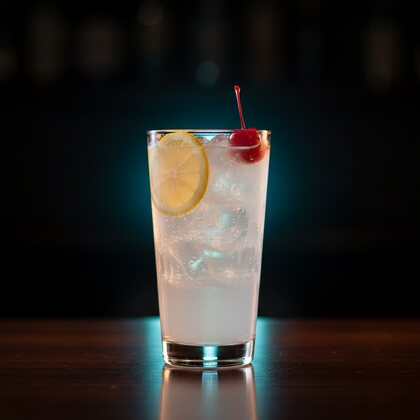
The Tom Collins is the drink a hotel bar reaches for when a guest sits down by the pool at three in the afternoon and asks for something long, cold and not too strong. Gin, fresh lemon, a little sugar and a top of soda: a sour stretched into a highball, and that stretch is where new bartenders go wrong. Too much syrup and it tastes like canned lemonade; flat or warm soda and it dies before it reaches the table; bottled lemon juice and the whole glass tastes of the bottle. Done properly it is pale cloudy gold under a lively head of fine bubbles, sharp at first sip, softened by the sugar, with juniper sitting quietly behind the citrus and a clean finish because the soda keeps rinsing the palate. The glass it is served in was named after the drink. Swap the spirit and you have a Vodka Collins, a Ron Collins or a Juan Collins, all built the same way.
Specification
| Ingredients | Amount | Role in the glass |
|---|---|---|
| Gin (Old Tom gin for a true Tom Collins, London dry gin for what is technically a John Collins) | 45 ml | The backbone and the only source of strength. Old Tom brings a touch of sweetness and a rounder mouthfeel; London dry is drier and more juniper forward. Most bars today use London dry and still call it a Tom Collins |
| Fresh lemon juice | 30 ml | The sour. Squeezed within 4 hours of service, strained of pips and pulp. Gives the sharp first sip and the pale cloudy colour |
| Simple syrup, 1:1 sugar to water | 15 ml | The sweet that rounds off the acid. 2:1 lemon to syrup is the IBA default; one extra bar spoon is the adjustment for a guest who finds it sharp |
| Soda water, well chilled | 60 ml (up to 90 ml for a lighter, longer serve) | The length and the life of the drink. Dilutes the sour, adds the sparkle, rinses the palate between sips. Must be cold and freshly opened |
| Ice cubes | Enough to fill the Collins glass to the top | Chills the glass and slows dilution. A glass half full of ice warms up and goes flat in minutes |
| Lemon wheel and maraschino cherry | 1 wheel on the rim, 1 cherry on a pick | The IBA garnish. The wheel signals the citrus before the first sip; the red cherry is the visual signature of the classic Collins |
Technique
- Fill a Collins glass to the top with ice cubes, let it stand for 30 seconds, then tip out any meltwaterA glass full of cold ice keeps the drink near 2 to 4 °C for the 10 to 15 minutes it takes to drink. Meltwater is uncontrolled dilution on top of the soda, so start dry
- IBA build: measure 45 ml gin, 30 ml fresh lemon juice and 15 ml simple syrup with a jigger straight into the ice filled glassThe IBA method is built in the serving glass, quicker on a busy bar and slightly softer in texture. Measure every time: 5 ml too much syrup is the difference between a Collins and a sweet lemonade
- Alternative, the hotel bar shake: gin, lemon and syrup in a shaker with ice, shake hard for 8 to 10 seconds, strain over fresh ice in the Collins glassShaking chills the sour to about -2 to 0 °C before the soda touches it, so the bubbles hold longer, and aerates the lemon into a lighter texture. This is closer to Jerry Thomas's 1876 recipe. Strain over fresh ice, not the shaking ice, which is already half melted
- Top with 60 ml of well chilled soda, poured slowly down the inside of the glass or over the back of a bar spoonSoda that hits ice from height loses a third of its gas before the guest sees the glass. Pouring down the side keeps the carbonation in the drink
- Stir gently: one or two lifts with the bar spoon from the bottom, no moreThe lemon and syrup sit at the bottom under the lighter soda, so one lift blends them. More than two turns knocks the gas out. The IBA says stir gently for a reason
- Garnish with a lemon wheel on the rim and a maraschino cherry on a pick, add a long straw, and send it immediatelyJerry Thomas wrote drink while it is lively. A Collins left on the pass for 3 minutes is a flatter drink. The straw is standard because the glass is too tall and too full of ice to sip comfortably from the rim
Service
Origin
The story begins in London in the early 19th century at Limmer's Hotel on Conduit Street, Hanover Square, where the head waiter was John Collins. A punch of genever (the Dutch style of gin), lemon, sugar and soda water served there took his name, and a verse from the 1860s opens "My name is John Collins, head waiter at Limmer's, corner of Conduit Street, Hanover Square". In 1874 the Great Tom Collins Hoax swept New York and then Philadelphia, Boston and other American cities. The prank was to tell a friend that a man called Tom Collins had been bad mouthing him in a bar around the corner; the victim rushed from bar to bar demanding to see Tom Collins, and newspapers printed items about the hunt for a man who did not exist. Bartenders capitalised by naming a drink Tom Collins, so anyone who stormed in asking for him could at least be served one. In 1876 Jerry Thomas printed the first recipe in the second edition of his Bar-Tender's Guide: 5 or 6 dashes of gum syrup, the juice of a small lemon, 1 large wine glass of gin, 2 or 3 lumps of ice, shake up well and strain into a large bar glass, fill up with plain soda water and "drink while it is lively". Harry Johnson's 1882 bartender's manual specified Old Tom gin, the lightly sweetened style of the 18th and 19th centuries, which many historians see as the other half of the name: as tastes moved from genever to Old Tom, John Collins became Tom Collins. The tall narrow glass took the name Collins glass. The IBA today files the drink under John Collins in The Unforgettables, noting that Old Tom gin makes it a Tom Collins.
Taste and body
The first sip is bright lemon and a sharp acidic lift, then the sugar arrives and rounds it off so the sourness never bites. Juniper and gin botanicals sit behind the citrus rather than in front of it; with Old Tom gin the middle is softer and slightly sweet, with London dry it is drier and more herbal. Light body, fine steady bubbles. The finish is short, clean and cold, and the soda leaves the palate rinsed so the next sip tastes as fresh as the first. The colour should be pale cloudy gold with a thin head of foam that settles in about a minute. A clear, still glass means the lemon was not fresh or the soda was dead.
Pairs well with
- Fish and chips or any battered fried fish, the lemon and bubbles cut the oil
- Oysters and chilled seafood platters
- Grilled prawns with garlic and herbs
- A club sandwich or chicken and avocado sandwich by the pool
- Green salads with a citrus dressing
- Mild fresh cheese such as goat's cheese or burrata
Hotel bar variations
- John Collins · The IBA name for the same 45/30/15 plus 60 ml soda build. Historically made with genever at Limmer's, in the United States long made with bourbon or whiskey, and the IBA today specifies gin. Order a John Collins in a whiskey led bar and you may get bourbon; ask
- Gin Fizz · The short cousin. IBA: 45 ml gin, 30 ml lemon, 10 ml syrup, 80 ml soda, shaken and served in a small tumbler with no ice. The Collins is built long over ice and lasts 15 minutes; the Fizz is shaken short and meant to be drunk in 3
- Elderflower Collins · 15 ml elderflower liqueur or cordial replacing part of the syrup: 45 ml gin, 30 ml lemon, 15 ml elderflower and no more than 5 ml plain syrup. Floral, a little sweeter, the modern hotel bar favourite for a summer menu
- Vodka Collins · 45 ml vodka instead of gin, everything else the same. Cleaner and more neutral, all lemon and soda, for the guest who says they do not like gin
- Ron Collins and Juan Collins · The same build with 45 ml white rum (Ron Collins) or 45 ml blanco tequila (Juan Collins). The rum version leans toward a lighter Mojito without mint; the tequila version is bright and slightly earthy
Common mistakes
- Warm or half flat soda. A bottle opened an hour ago or stored on the shelf kills the drink before it leaves the bar. Open a fresh cold bottle or use a soda gun tested that shift
- Bottled or pre squeezed lemon juice from the day before. Lemon oxidises and turns dull and bitter within hours. Squeeze within 4 hours of service and taste it
- Stirring hard after the soda goes in. Ten turns with the bar spoon and the glass is flat. One or two gentle lifts from the bottom is all it needs
- Free pouring the syrup. 5 ml extra pushes the drink from balanced to sweet. Jigger the 15 ml every time and adjust only on request
- A half filled glass of ice, or crushed ice. Half filled warms up in 5 minutes; crushed melts into the drink and the last third tastes of water
Bartender's notes
In a hotel bar the Collins is for the guest who does not know what they want but does not want anything heavy, so read the moment: sunshine, terrace, first drink of the afternoon, and offer it by name. Ask whether they prefer it sharper or softer and adjust the syrup by a bar spoon, not the lemon. For events of 100 or more, pre mix gin, lemon and syrup in the 45/30/15 ratio, keep it at 2 to 4 °C in sealed bottles, and at service pour 90 ml over a Collins glass full of ice and top with 60 ml of cold soda. The mix holds for 4 to 6 hours before the lemon fades, so make it in batches through the day. Never pre mix the soda. If a guest asks the difference from a Gin & Tonic: both are long gin drinks over ice, but the Collins is a lemon sour lengthened with soda while the G&T is gin with bitter quinine tonic. The Collins is the one to recommend to a guest who finds tonic too bitter.
Let the AI bartender pick the right one for you
One photo. The AI reads your mood and chooses from all 20 classics.
Frequently asked questions
What is the official IBA Tom Collins recipe, and why does the IBA call it John Collins?
The IBA lists the drink as John Collins in The Unforgettables: 45 ml gin, 30 ml fresh lemon juice, 15 ml simple syrup and 60 ml soda water, poured directly into a highball filled with ice, stirred gently and garnished with a lemon slice and a maraschino cherry. The IBA page notes that Old Tom gin makes it a Tom Collins. Most bars use London dry gin and call it a Tom Collins anyway.
What is Old Tom gin and does it matter?
Old Tom is a lightly sweetened style of gin from the 18th and 19th centuries, softer and rounder than London dry. Harry Johnson's 1882 manual called for it in the Collins, the likely origin of the name Tom. It gives a slightly plusher drink, but a London dry Collins is what 9 out of 10 guests expect. With Old Tom, consider cutting the syrup to 10 ml.
Should a Tom Collins be shaken or built in the glass?
Both are correct. The IBA method builds everything in the ice filled glass and stirs gently, which is quicker and softer. Many hotel bars shake the gin, lemon and syrup for 8 to 10 seconds, strain over fresh ice and then top with soda, closer to Jerry Thomas's 1876 recipe and colder and livelier. Either way the soda goes in last and is stirred no more than twice.
What is the difference between a Tom Collins and a Gin Fizz?
Same family, different length. The Collins is 45 ml gin, 30 ml lemon and 15 ml syrup built long over ice in a Collins glass with 60 ml soda, meant to last 15 minutes. The IBA Gin Fizz is 45 ml gin, 30 ml lemon, 10 ml syrup and 80 ml soda, shaken and served short in a small tumbler with no ice, drunk quickly while the fizz lasts.
What is a Collins glass?
A tall, narrow glass of 300 to 410 ml, slightly taller and narrower than a standard highball, named after this drink. The narrow shape keeps the surface area small so the soda holds its gas longer, and the height leaves room for a full column of ice plus 150 ml of liquid.
How strong is a Tom Collins?
Light. 45 ml of gin at 40% spread across 60 ml of soda, 30 ml of lemon, 15 ml of syrup and the ice melt puts the glass at roughly 9 to 10% ABV, about the same as a Gin & Tonic and less than half a Negroni. That is why it works as a first drink of the afternoon.
Can a Tom Collins be batched for events?
Partly. Pre mix gin, lemon and syrup in the 45/30/15 ratio and keep it at 2 to 4 °C in sealed bottles. At service pour 90 ml over a Collins glass full of ice and top with 60 ml of cold soda. Use each batch within 4 to 6 hours because the lemon fades, and never add the soda in advance.
Can it be made without alcohol?
Yes, and it is a good non alcoholic option for the terrace. Leave out the gin and build 30 ml fresh lemon, 15 ml simple syrup and 90 to 120 ml soda over ice in the same glass with the same garnish. It is essentially a sparkling lemonade; a few dashes of non alcoholic bitters or 10 ml of elderflower cordial give back some of the depth the gin provided.